
how to remove car dents without paint repair usually comes down to one thing: the paint has to be intact, and the metal has to be able to “bounce” back without cracking the clear coat.
If you’ve ever walked up to your car and spotted a door ding or a shallow crease, you’re probably thinking the same thing most people do, “Do I really have to repaint this?” Many times, you don’t, but only if you pick the right method for the right dent.
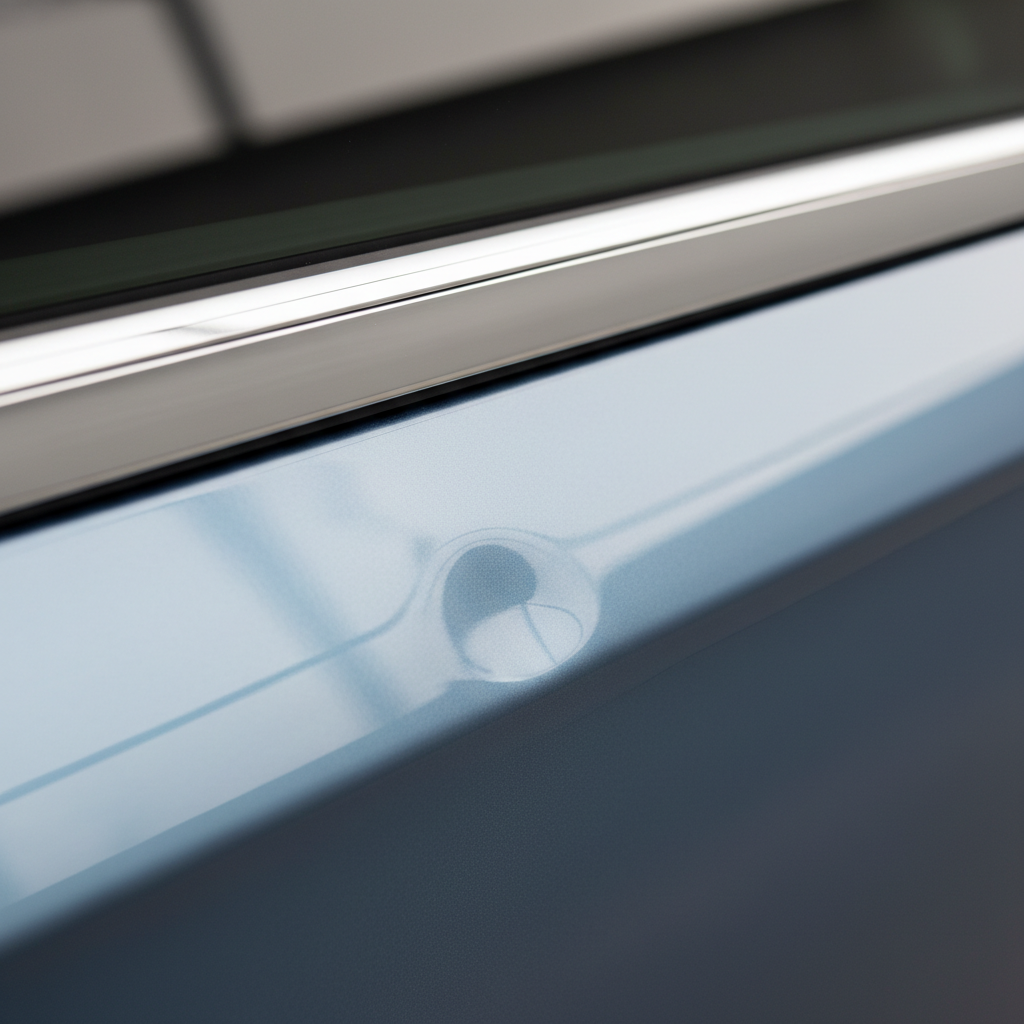
This guide helps you quickly judge whether your dent is a paintless candidate, then walks through practical DIY options like suction and hot-water reshaping, plus what a paintless dent repair technician does differently. You’ll also see common mistakes that turn a small dent into a cracked-paint problem.
Key takeaway: if paint is already chipped, or the dent sits on a sharp bodyline, “no paint repair” may still be possible, but it gets harder and riskier fast.
What “Without Paint Repair” Really Means (and When It’s Possible)
Removing a dent without repainting typically means the paint film stays unbroken while the metal (or plastic bumper cover) returns close to its original shape. In the U.S., this is commonly called Paintless Dent Repair (PDR).
The sweet spot for PDR-style fixes is a shallow dent with flexible paint. On newer cars with modern clear coat, you often have a decent chance, but there are limits.
- Best candidates: door dings, small hail dents, shallow “soft” dents on flat-ish panels
- Riskier: sharp creases, dents on edges, dents on bodylines, older repaint jobs (paint may be more brittle)
- Often not PDR-only: paint cracks, missing paint, rust starting, stretched metal that “oil cans”
According to the National Highway Traffic Safety Administration (NHTSA), vehicle owners should follow manufacturer guidance for repairs that may affect safety systems, which matters if the dent is near sensors, side-impact areas, or structural reinforcements.
Quick Self-Check: Is Your Dent a Good Paintless Candidate?
Before you buy tools or start heating panels, do a quick reality check. This step saves people the most money, because it stops “random internet fixes” on dents that were never good DIY targets.
Use this 60-second checklist
- Paint condition: no chips, no spider cracking, no exposed primer
- Dent depth: shallow is better; if it looks like a pinch, be cautious
- Location: center of a door is easier than an edge or tight curve
- Panel material: steel and aluminum behave differently; bumpers are usually plastic
- Access behind the panel: if you can’t reach the backside, pushing tools may not work
- Temperature: cold weather raises the chance of paint cracking during aggressive DIY
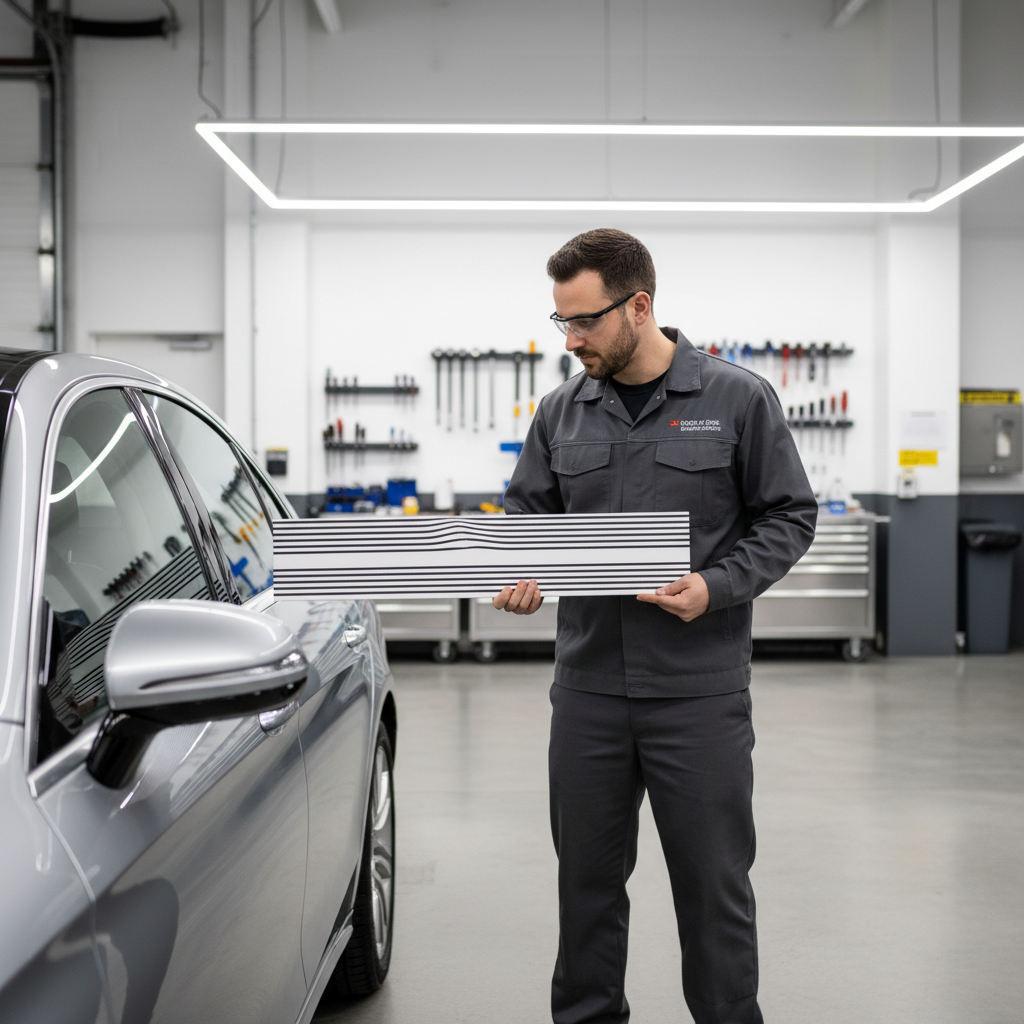
Practical tip: use a flashlight or a reflection board (even a striped screen on a phone) to see the true shape. A dent that “looks small” can still have a long crease.
Choosing the Right Method: DIY vs. True PDR vs. Body Shop
People get stuck because they treat every dent like the same problem. It isn’t. Use this table to pick a lane quickly.
| Situation | What usually works | What to avoid |
|---|---|---|
| Small, shallow door ding; paint perfect | Suction cup / DIY pull; or PDR tech for cleaner finish | Glue pulling on repainted panels |
| Hail-style small dents across hood/roof | Professional PDR (tool pushing, controlled finishing) | Heat + yanking methods that create high spots |
| Sharp crease on bodyline | PDR tech (may improve a lot, may not be perfect) | Overpulling; you can crack paint or distort bodyline |
| Paint cracked or missing | Body shop repair (fill/paint) after dent correction | Heating and pulling expecting “no paint” result |
| Dent near sensors/ADAS areas | Pro assessment; follow OEM guidance | DIY that risks sensor mounts or harnesses |
DIY Methods That Can Work (If You Keep Expectations Real)
If your goal is to remove car dents without paint repair at home, you’re aiming for “improvement” more than perfection. Some DIY fixes can get you surprisingly close on the right dent, then you decide if a PDR tech is worth it for the last 10%.
1) Suction cup pullers for shallow dents
This is the cleanest low-risk starting point when paint is intact and the dent is broad and shallow.
- Wash the area, any grit can scratch when you pull
- Warm the panel slightly (not hot), especially if it’s cold outside
- Center the suction cup and pull steadily, avoid jerking
- Stop if you see the dent “pop” into a high spot, that’s harder to fix DIY
When it disappoints: tight dents, creases, and dents on curved edges often don’t respond well.
2) Hot water reshaping for plastic bumpers
Many bumper “dents” are actually flexed plastic. Hot water can make the material pliable enough to push back from behind.
- Pour hot (not boiling) water over the area to warm it evenly
- Access the backside (wheel liner or undertray may need to move)
- Push gradually with your palm, not a hard tool that can leave marks
- Cool the area with water to help it hold shape
Safety note: water temperature and access vary by vehicle, and burns are possible, so use gloves and common sense. If you’re unsure, a professional shop may be safer.
3) Light tapping and “knockdown” finishing (advanced)
True PDR uses controlled pushing from behind and then tiny knockdowns to flatten high spots. DIY kits exist, but this is where people create waves in the reflection.
- Use a reflection source to track progress, don’t rely on “looks good” in shade
- Make smaller adjustments than you think you need
- If you can’t explain what a “high spot” is yet, pause and consider hiring out
Glue Pulling: Effective, but Easy to Mess Up
Glue pulling gets popular because you don’t need backside access. The catch is that it can pull too hard, and it can pull paint off panels that were repainted or already weak.
If you try it, keep it conservative.
- Confirm the panel is likely factory paint; unknown bodywork history raises risk
- Use the right tab size, smaller tabs concentrate force and can create peaks
- Pull in small cycles, reassess each time rather than chasing a one-pull miracle
- Remove glue safely with appropriate products, not random solvents
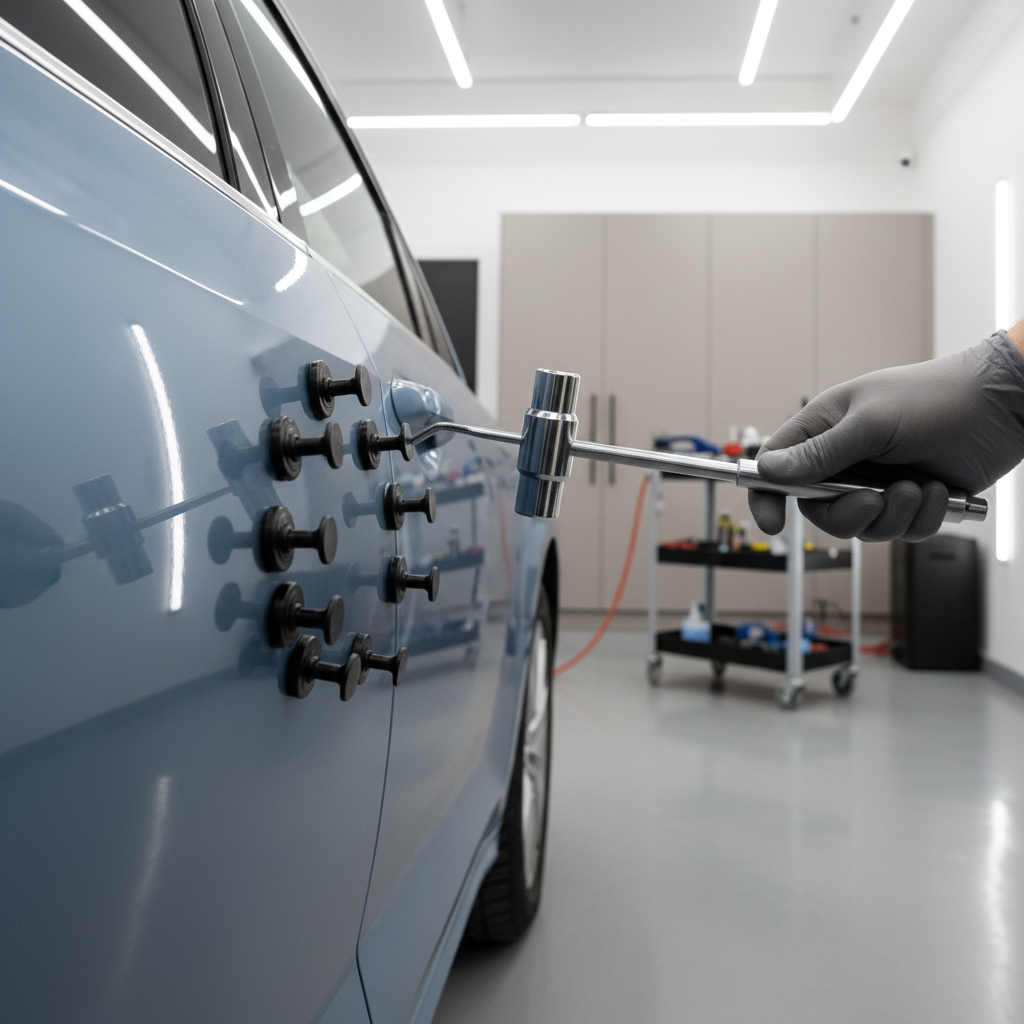
Real talk: glue pulling is one of the fastest ways to turn “no paint repair” into “now I need paint” if the panel was repainted. If you have any doubt, a PDR tech can usually tell from readings and texture.
Common Mistakes That Make Dents Worse
Most failures aren’t because the method is “bad,” it’s because the dent wasn’t a match, or the user went too aggressive.
- Overheating the panel: heat can help, but too much can damage clear coat or nearby trim
- Pulling too hard, too fast: creates high spots that look worse than the original dent
- Skipping cleaning: trapped grit scratches paint while tools shift
- Working without a reflection guide: you can’t “feel” flat, you need to see it
- Fixating on perfection: many DIY wins are 70–90% improvement, and that can still be a great outcome
When It’s Smarter to Call a PDR Pro (or a Body Shop)
If any of these show up, DIY may cost more than it saves.
- Paint damage: chips, cracks, or visible rust staining
- Aluminum panels: many modern hoods and fenders are aluminum, it can be less forgiving
- Creases on bodylines: still repairable, but the finishing skill matters
- Dents near airbags, wiring, sensors: doors and quarter panels can hide important components
- Lease return or resale prep: “almost” can still get flagged, a pro finish may pay back
According to I-CAR, repair methods should follow accepted industry procedures and training to help ensure repairs maintain vehicle integrity, especially where structure or advanced materials are involved.
If you suspect the panel has structural involvement (not just cosmetic skin), or you notice door alignment issues, a collision repair shop should take a look before you keep pushing and pulling.
Practical Step-by-Step Plan (So You Don’t Waste a Weekend)
Here’s a simple path that works for most people trying to remove car dents without paint repair while keeping risk in check.
- Step 1: Clean the area and inspect paint under bright light
- Step 2: Identify panel type (metal vs plastic bumper) and dent shape
- Step 3: Start with the lowest-risk method (suction for shallow dents, hot water for bumpers)
- Step 4: Re-check reflections after every attempt, stop when improvement stalls
- Step 5: If it’s close but not clean, get a PDR estimate, you may be surprised how fast they can finish it
Key point: the goal is controlled progress, not brute force. Most “DIY disaster” dents started as something fixable.
Conclusion: Keep the Paint, Pick the Right Fight
If your paint is intact and the dent is shallow, you have a real shot at removing car dents without paint repair, either with careful DIY or with a PDR technician who can finish it cleanly. The moment you see cracking, sharp creasing, or signs of prior repaint, the smarter move is usually to slow down and get a professional opinion.
If you want one action today, take a bright light, check the paint closely, then choose the least aggressive method that fits the dent shape, that single decision does more than any tool kit.
FAQ
- Can I remove a car dent without paint repair if the paint is slightly scratched?
Often yes, as long as the scratch is only in the clear coat and the color layer isn’t compromised. If you can see primer or bare metal, dent removal without refinishing becomes less likely. - Does boiling water work to pop out dents?
On plastic bumpers, hot water can help reshape material, but boiling water raises burn risk and may affect surrounding trim. Warm-to-hot water plus gentle pushing is usually the safer approach. - Is glue pulling safe on any car?
Not always. It tends to be riskier on panels that were repainted, because the bond between paint layers may be weaker. When history is unknown, many people choose suction or professional PDR instead. - Will a plunger remove a dent?
Sometimes, if it’s a broad, shallow dent on a flat panel and the plunger seals well. It’s a crude version of a suction puller, so results vary a lot. - What’s the difference between DIY dent pulling and PDR?
PDR usually involves precise tool control from behind the panel and careful finishing to remove tiny highs and lows. DIY methods can improve shape, but often struggle with “factory-flat” reflections. - Can I do paintless dent repair on aluminum panels?
It’s possible, but aluminum can respond differently than steel and may require more skill to avoid distortion. For larger dents or creases, getting a PDR pro involved is often the lower-risk play. - How do I know if a dent is too deep for no-paint repair?
If the dent has a sharp edge, looks like a fold, or the panel feels stretched and pops in and out, it may not return cleanly without filler and paint. A quick PDR estimate can confirm what’s realistic.
If you’re trying to avoid repainting but want a cleaner result than typical DIY tools can deliver, a quick quote from a local PDR technician can help you decide whether to stop at “good enough” or finish the job the right way without turning it into a paint project.