
Best car door sill protectors for scuff marks are the quickest way to stop shoes, sand, and pet claws from turning your entry area into a scratched-up eyesore, especially if you drive daily or carry kids and gear.
If you already have scuffs, you’re not alone, door sills take repeated hits and most factory finishes are tough but not magic, once the clear coat gets hazy, every new rub shows faster.
This guide stays practical, what types work, what to buy for your situation, how to install without bubbling or peeling, and when it’s smarter to fix the paint first instead of covering damage and hoping for the best.
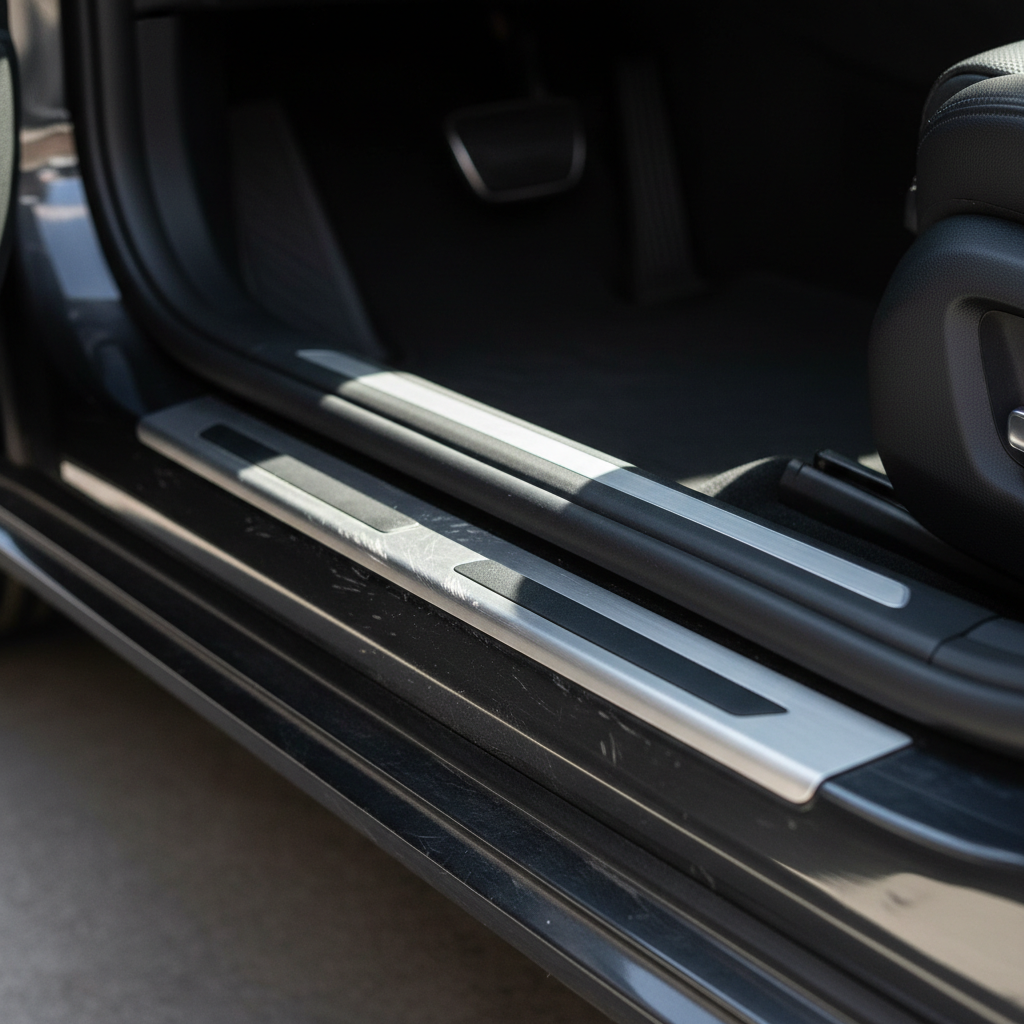
Why door sills get scuffed so easily (and why it gets worse fast)
Door sills live in the “strike zone”, your heel catches the edge, gravel rides in on shoes, and wet weather turns grit into sandpaper. Even careful drivers miss it when juggling bags or helping a passenger.
- Shoe contact from stepping in and out, especially boots, cleats, heels, and work shoes.
- Dirt and grit that sits on the sill and gets rubbed across the surface.
- Kids and car seats that get dragged, twisted, or bumped during installs.
- Pets that jump in and out, claws catch edges and trim.
- Delivery and rideshare use increases cycles, even “light” scuffs add up.
One more thing, many sills are painted metal or painted plastic with a clear coat, once you break through that top layer, scuffs stop being “wipe-off” and start looking permanent.
Types of door sill protectors: what actually works in real use
There’s no single winner, the right pick depends on your priorities, subtle look, maximum protection, easy removal, or OEM-like fit. Here’s how the common types behave over time.
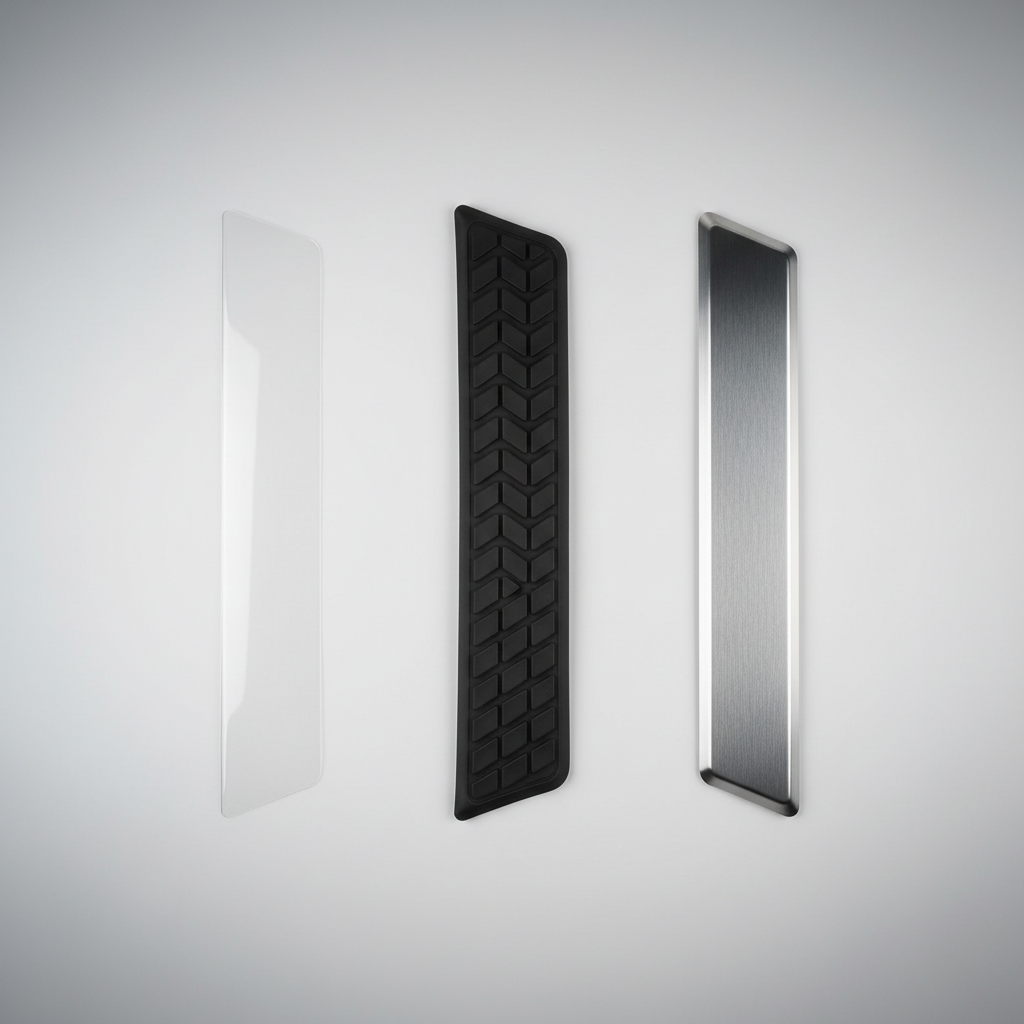
Clear paint protection film (PPF)
If you want the cleanest look, clear PPF is usually the move. It’s thin, nearly invisible when installed well, and takes abrasion better than basic vinyl. Many PPF options also self-heal minor swirls with heat, though edges can lift if prep is sloppy.
- Best for: newer cars, leased vehicles, people who want “you can’t tell it’s there” protection
- Watch-outs: precise installation matters, cheap film can yellow or look cloudy
Vinyl sill strips (carbon fiber look, black, patterned)
Vinyl is popular because it’s inexpensive and forgiving, you can hide existing cosmetic scuffs and match black trim. The trade-off is durability, heavy abrasion can chew it up faster than thicker materials.
- Best for: covering light scuffs, budget builds, quick refresh
- Watch-outs: may shrink or lift at corners in heat if adhesive is weak
Rubber or TPU textured guards
Textured rubber-style guards feel “grippy” and take abuse well, they’re great for trucks, SUVs, and families. They can look a bit aftermarket if the cut isn’t clean, but they do the job.
- Best for: heavy foot traffic, outdoor use, pets
- Watch-outs: thick edges can catch dirt, some designs look bulky
Stainless steel or aluminum sill plates
Metal plates look premium and resist scraping, but fit matters a lot. Universal plates can look slightly off, and metal-on-paint contact needs a good adhesive layer so it doesn’t trap grit underneath.
- Best for: durable protection with a “finished” look
- Watch-outs: cheap edges can be sharp, wrong size looks awkward
Custom-fit OEM-style protectors
Vehicle-specific kits are often the least stressful because coverage matches the factory sill shape. They cost more, but they reduce the “guess and trim” step that causes most bad installs.
Quick comparison table: choose by your driving reality
Use this as a fast filter, then narrow by fit, adhesive quality, and how visible you want the protector to be.
| Type | Look | Scuff resistance | Install difficulty | Best for |
|---|---|---|---|---|
| Clear PPF | Nearly invisible | High | Medium to high | New cars, leases, clean OEM vibe |
| Vinyl strip | Styled / matte / carbon | Medium | Low to medium | Budget, covering existing scuffs |
| Rubber/TPU | Utility look | High | Low | Families, pets, outdoor use |
| Metal plate | Premium / bold | High | Medium | High wear areas, showy style |
| Custom-fit kit | OEM-like | Medium to high | Low to medium | People who hate trimming and guessing |
Self-check: which protector should you buy?
Before you shop, decide what problem you’re solving, preventing scuffs on clean paint is different from hiding existing marks.
- If your sills are clean and you want invisible protection: lean toward quality clear PPF or a custom-fit PPF kit.
- If you already see gray rub marks and scratches: vinyl or textured guards hide flaws better than clear film.
- If shoes constantly hit one spot: choose thicker rubber/TPU or a wider plate with more coverage.
- If you worry about resale/lease return: removable film with clean edges usually makes life easier.
- If you park outside in heat/cold swings: prioritize reputable adhesive and materials rated for automotive exterior use.
Practical tip, measure the sill width and length, then check for curves and raised areas, universal kits work, but they often look “universal” unless you trim carefully.
What to look for when shopping (the stuff listings don’t make obvious)
A lot of “best” lists focus on aesthetics, but long-term performance often comes down to adhesive, edge finishing, and whether the material matches how your car gets used.
- Adhesive type: 3M automotive-grade tape is a good sign, but still depends on surface prep and genuine sourcing.
- Edge design: beveled edges collect less dirt and are less likely to peel.
- Coverage size: protect the whole step-in zone, not just a skinny strip that misses the impact area.
- Texture and color: textured black hides wear, clear looks best when the paint is already in good shape.
- Clean removal: if you plan to remove later, avoid ultra-aggressive adhesives unless the kit is designed for it.
According to the National Highway Traffic Safety Administration (NHTSA), vehicle modifications should not interfere with safe operation or required safety equipment, sill protectors are typically cosmetic, but you still want to avoid anything that could snag shoes and affect entry/exit.
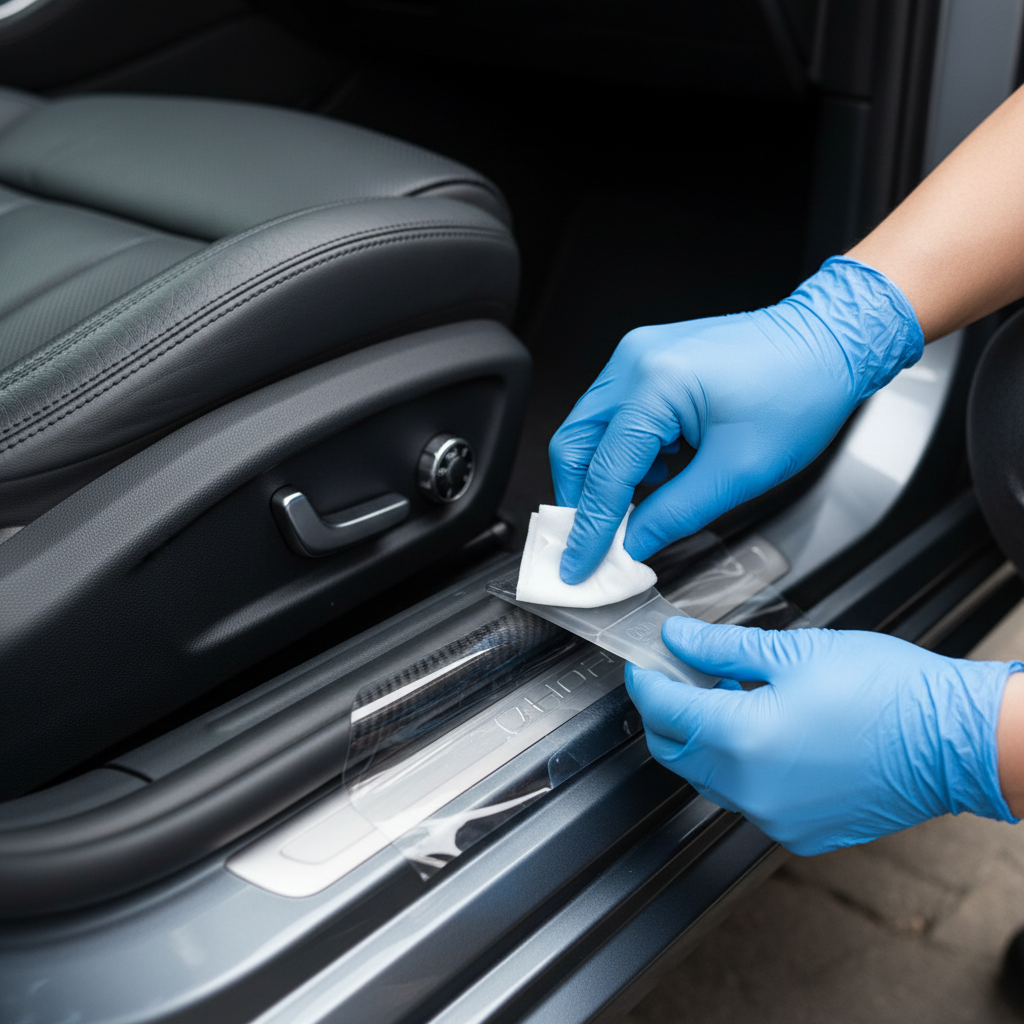
Installation that doesn’t peel: a simple step-by-step
Most complaints about door sill guards come from install, not the product itself. Take 20 minutes, do it once, and you’ll stop thinking about it.
1) Clean like you mean it
Wash off dirt, then wipe with isopropyl alcohol on a lint-free towel. If there’s any dressing or silicone shine product on the sill, tape won’t bond well.
2) Test fit and mark alignment
Dry fit the protector, check door clearance, then use painter’s tape as a guide line. This saves you from crooked installs that you notice every time you get in.
3) Warm the surface if it’s cold
Adhesives usually bond better around room temperature. If you’re in a cold garage, a hair dryer on low can help, but don’t overheat paint or plastic trim.
4) Apply slowly, press edges hard
Start from one end, avoid trapping air, then press down edges with steady pressure. For film, a small squeegee helps, for tape-backed guards, use firm hand pressure.
5) Give it cure time
Avoid washing or soaking the area for a day or two when possible. Many adhesives build strength over time, so immediate water exposure can cause edge lift.
Fixing existing scuff marks before you cover them
If you’re chasing the “new car” look, covering damage without cleaning it up can leave a shadow underneath, especially with clear PPF.
- Light rubber transfer: often comes off with a gentle cleaner and microfiber.
- Hazy clear coat scuffs: may improve with a mild polish, go slow, aggressive compounds can thin clear coat.
- Deep scratches to color or bare metal: consider touch-up paint or a body shop opinion, then protect after it cures.
According to the American Automobile Association (AAA), keeping exterior surfaces clean and protected can help preserve vehicle appearance and value, which is basically the whole point here, stop the damage cycle before it becomes “normal.”
Common mistakes that make “good” protectors fail
- Installing over wax or dressing: looks clean, bonds poorly.
- Choosing narrow strips: they miss the contact zone, so scuffs still happen.
- Ignoring curves and edges: corners lift first, especially on textured plastics.
- Buying ultra-cheap film for a white car: clouding and yellowing show more on light paint.
- Not trimming cleanly: jagged edges collect grime and start peeling.
If you want the “best car door sill protectors for scuff marks” experience, this is the unglamorous truth, prep and fit matter as much as the material.
When it’s worth getting professional help
If you’re comfortable with DIY, most sill guards are doable. Still, a pro install can make sense in a few cases.
- High-end cars or lease returns where cosmetic details are scrutinized.
- Complex curves that fight universal kits and cause wrinkles.
- Deep paint damage where you should repair first, then apply protection.
Detail shops that install PPF daily tend to produce cleaner edges and fewer bubbles, and they can also advise on whether you should polish first. If you’re unsure, asking for a quick quote is usually low-effort.
Key takeaways and a practical conclusion
If you want a subtle factory look, clear PPF or a custom-fit kit usually feels most “right.” If your sills already look rough or your use is heavy, rubber/TPU or a wider protector gives more forgiveness and less maintenance stress.
Your next step can be simple, measure your sill area, decide whether you’re preventing or hiding scuffs, then pick the material that matches your daily entry and exit habits. After that, spend the extra few minutes on prep, it’s what keeps edges from peeling.
FAQ
What are the best car door sill protectors for scuff marks on SUVs and trucks?
For SUVs and trucks, thicker rubber/TPU guards or wider plates tend to hold up better because step-in height and shoe contact are more aggressive than on many sedans.
Will clear PPF hide existing scuffs on my door sill?
Usually not, clear film protects well but tends to “show what’s underneath.” Light transfer marks may clean up first, deeper haze often needs a mild polish before applying film.
Do universal door sill protectors fit well enough?
They can, especially on flatter sills, but the finish depends on trimming and alignment. If your sill has tight curves, a vehicle-specific kit often looks cleaner.
How long do adhesive sill protectors last?
It varies with climate, washing habits, and prep. A well-prepped install with decent adhesive can last years, while a rushed install over wax may lift quickly.
Can sill protectors damage paint when removed?
They can if the adhesive is very aggressive or removal is done cold and fast. Warming the area and removing slowly helps, and if you’re worried, test a small corner first.
Are metal door sill plates safe for daily use?
Many are fine, but check for sharp edges and make sure the plate doesn’t create a raised lip that catches shoes. If you notice snagging, it’s worth switching to a beveled or softer-edge option.
What’s the easiest option for renters, leases, or frequent vehicle swaps?
Clear film or quality vinyl that removes cleanly is often the most lease-friendly approach, as long as you avoid cutting on the paint and follow cure time guidance.
If you’re trying to pick between a subtle film and a tougher guard, or you’re not sure whether your current scuffs need polishing first, it can help to narrow choices by a quick measurement and a couple of photos, you’ll avoid buying something that looks good online but fits awkwardly on your actual sill.