
how to fix car power door lock not working usually comes down to a few repeat offenders: a blown fuse, a weak key fob battery, a failing door lock actuator, or a broken wire in the door jamb.
It matters because a flaky power lock is more than an annoyance, it can leave you locked out, stuck with a door that won’t secure, or quietly drain your battery if an actuator keeps trying to move.
I’m going to walk you through a practical workflow you can do in a driveway: quick checks first, deeper electrical diagnosis second, and “stop here and call a pro” points when it’s not worth guessing.
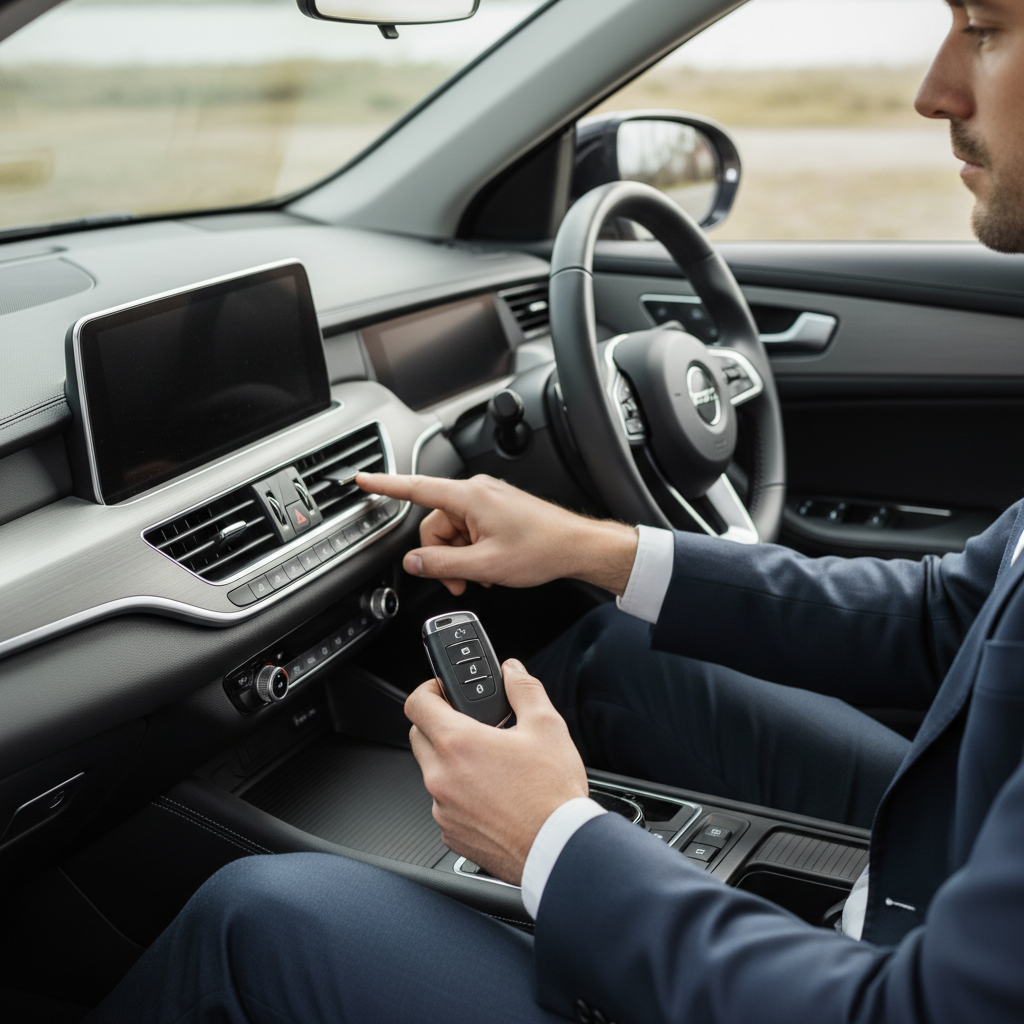
Start with the fast checks (they fix more than you think)
Before you pull panels, get clear on what “not working” means. Does one door fail, or all doors? Does it fail on the key fob but work on the door switch? Those patterns tell you where to look.
Quick symptom map
- All locks dead: fuse, relay, body control module, low battery/voltage, or a shared power/ground issue.
- Only one door fails: actuator, latch binding, or broken wires at that door.
- Works from switch but not fob: fob battery, fob programming, receiver/antenna issue, or interference.
- Intermittent: wiring fatigue in door jamb, moisture in connector, weak actuator, or low system voltage.
Check the key fob battery and “second fob” test
If your car has two fobs, try the spare. If the spare works, you’re likely dealing with the original fob battery or the fob itself. Replacing a fob coin cell takes minutes and costs little, and it’s an easy way to avoid over-diagnosing the car.
Also watch for range changes. If you have to stand right next to the door for the fob to work, that’s often a battery hint.
Check vehicle battery voltage (low voltage causes weird lock behavior)
Weak batteries can make modules “act strange” even when the car still starts. If you have a multimeter, you’re generally hoping to see around 12.6V at rest for a healthy fully charged battery, with variation by temperature and battery condition.
According to NHTSA, electrical issues can affect safety-related functions, so if you’re seeing multiple odd electrical symptoms at once, it’s smart to address the charging/battery health early rather than chasing individual parts.
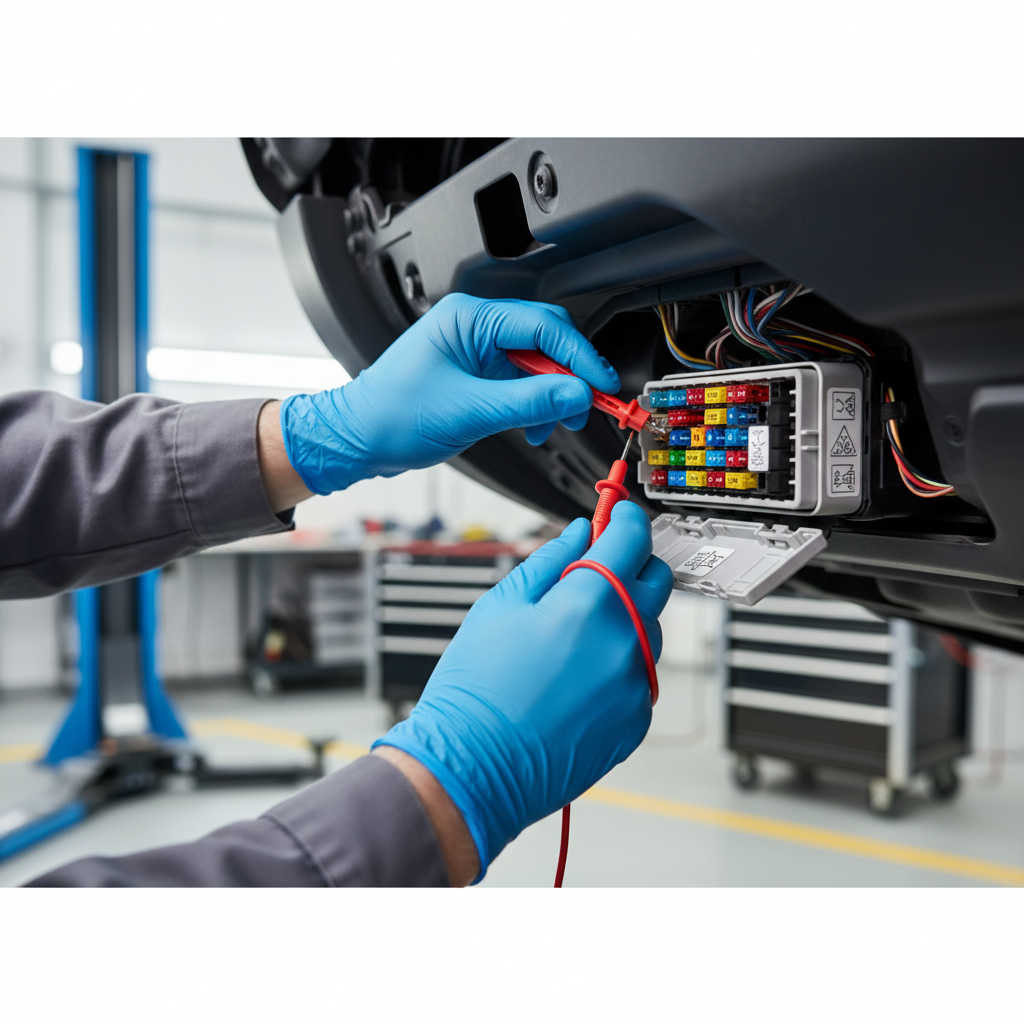
Fuse, relay, and control module basics (no guesswork)
If you’re searching how to fix car power door lock not working, the fuse check is still step one because it’s fast and it prevents you from burning time on an actuator when the circuit has no power.
How to find the right fuse without gambling
- Use the fuse box diagram in your owner’s manual. Look for labels like Door Locks, BCM (Body Control Module), Power Locks, or Keyless Entry.
- Check both the cabin fuse panel and the under-hood panel; many cars split circuits.
- Don’t just “eyeball” it. Use a fuse tester or multimeter if you can.
If the fuse is blown, replace it with the same amperage. If it blows again quickly, stop replacing fuses and move to wiring/short diagnosis, repeated fuse popping usually means a short or a motor drawing too much current.
Relays and BCM notes (what’s realistic DIY)
Some vehicles use a door lock relay, others drive locks through the BCM. Swapping a relay with an identical one (for example, from a non-critical circuit) can be a reasonable test, but only if your fuse box map clearly shows a matching relay.
If your car routes lock commands through the BCM, the fix might still be simple (power/ground, connector corrosion), but diagnosing module faults can turn into scan-tool territory.
Door-by-door diagnosis: actuator, latch, or wiring?
When only one door refuses to lock or unlock, you’re usually hunting a local problem. The three common ones are the actuator motor, a sticky latch, or broken wires in the door jamb boot.
Actuator failure signs (the classic)
- You hear a faint click or buzzing, but the lock knob barely moves.
- It works sometimes, especially in warm weather, then quits again.
- Manual lock works, power lock doesn’t.
Many actuators weaken over time. The motor still tries, but it can’t overcome latch friction.
Latch binding (the sneaky one)
If the lock mechanism feels stiff manually, an actuator can look “bad” when the latch is simply binding. Light lubrication on the latch mechanism can help, but avoid soaking electronics or spraying blindly into switches.
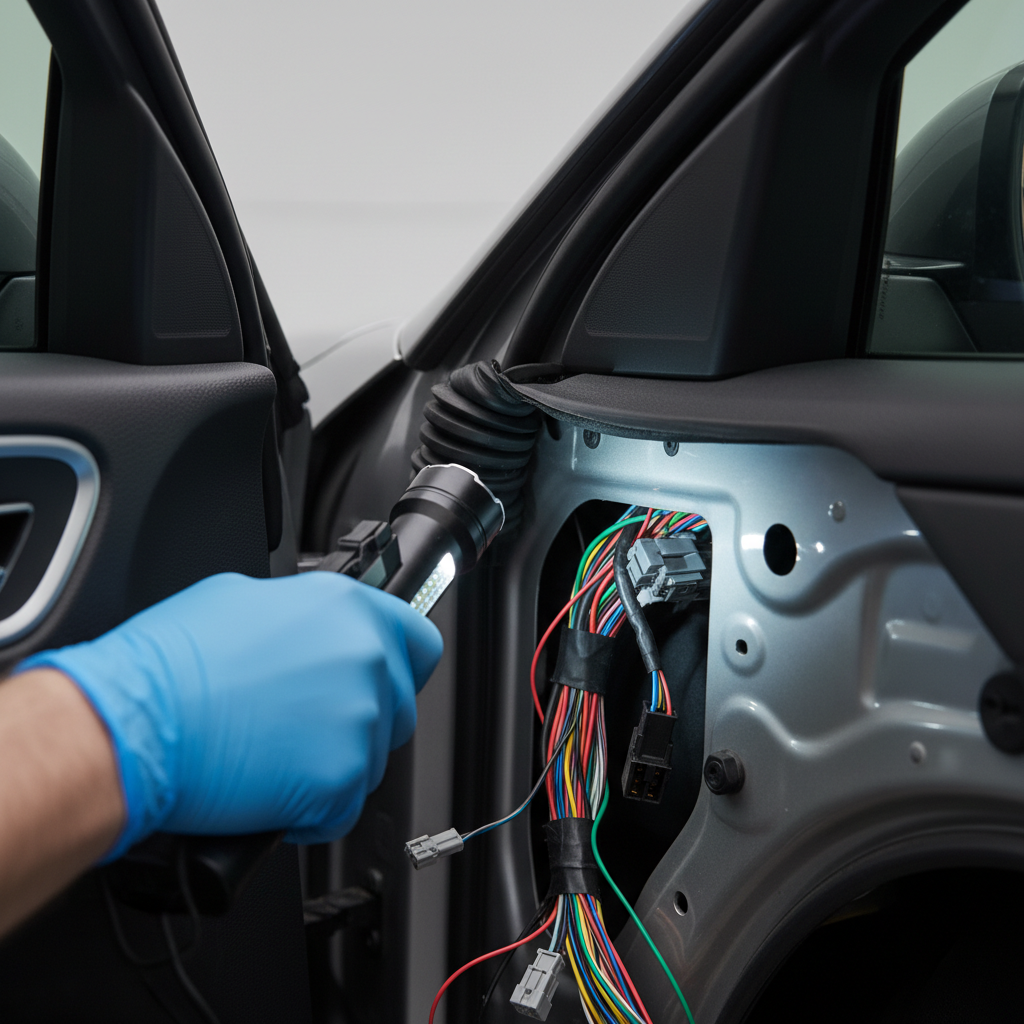
Door jamb wiring (often the cause of intermittent issues)
Repeated door opening flexes the harness. A wire can partially break inside insulation, so it looks fine but fails under movement. If locks cut in and out when you wiggle the rubber boot area, that’s a strong clue.
- Carefully pull back the rubber boot between door and body.
- Look for cracked insulation, stretched wires, green corrosion, or prior repairs.
- If you find damage, a proper repair means solder/heat-shrink or a quality crimp with sealed connectors, not twisting wires and tape.
DIY test checklist (so you don’t replace parts blindly)
Use this quick list to decide what to do next. It keeps you from buying an actuator when the fuse is the real issue.
- Does the door lock switch work? If yes but the fob doesn’t, focus on fob/programming/receiver.
- Do other doors work? If yes, focus on that door’s actuator/latch/wiring.
- Any recent rain or car wash? Moisture in connectors can cause temporary failure.
- Any recent stereo/remote start install? Aftermarket wiring sometimes taps lock circuits and can introduce faults.
- Does the problem change when turning the steering wheel or opening the door? That points toward wiring movement issues.
Simple table: symptoms to likely causes
| What you see | What it often means | Good first move |
|---|---|---|
| All doors dead, no sound | Fuse, relay, BCM power/ground, low battery | Check battery voltage, then fuses |
| One door dead, others fine | Actuator or door wiring | Listen for actuator noise, inspect jamb harness |
| Clicking but no movement | Weak actuator or binding latch | Check manual stiffness, consider actuator replacement |
| Works sometimes | Wiring fatigue, moisture, actuator on the way out | Wiggle-test harness, inspect connectors |
| Switch works, fob doesn’t | Fob battery/programming, receiver issue | Replace coin cell, try spare fob |
Fixes by scenario: what to do, step by step
This is the part most people want: the “do this next” path. Pick the scenario that matches your symptoms and stick to it.
Scenario A: All power locks stopped working
- Replace/charge the vehicle battery if voltage is low or the battery is aging, low voltage causes module misbehavior.
- Check the door lock and BCM fuses, replace with the correct amperage.
- Inspect grounds if you’re comfortable: loose/corroded grounds can knock out multiple body functions.
- Scan for body codes if the basics look good. A basic OBD2 reader may not read BCM codes; many cars need a scan tool with body module access.
Scenario B: One door won’t lock/unlock (common)
- Confirm manual operation: if the knob is stiff, address latch binding first.
- Listen at the door while pressing lock/unlock: click/buzz suggests actuator weakness.
- Inspect door jamb wiring if the issue is intermittent or changes with door movement.
- Replace the actuator if power and ground reach it but it won’t drive the lock. Many vehicles require removing the door panel and vapor barrier, take your time to avoid breaking clips.
Scenario C: Key fob doesn’t work but interior switch does
- Replace the fob battery and clean the contacts if they’re visibly dirty.
- Try re-sync/relearn if your model supports it; use the manufacturer procedure from the owner’s manual or service info.
- Rule out interference if it only fails in one location (parking garage, near antennas). This happens more than people expect.
- Consider receiver/antenna diagnosis if both fobs fail consistently, this may require a shop with the right scan tool.
Key points that prevent repeat failures
- Don’t keep feeding blown fuses; a repeat blow usually means a short or a motor pulling too much current.
- Actuators often fail gradually, so intermittent behavior is a real clue, not “random electronics.”
- Wiring in the door jamb is a frequent culprit on older vehicles and high-mileage daily drivers.
- Fix the mechanical drag; a sticky latch can kill a new actuator faster than you’d like.
Common mistakes (and how to avoid them)
Most wasted money comes from swapping parts too early. Here are the traps I see people fall into.
- Replacing the actuator without checking the latch: if the lock feels gritty or stiff manually, you’re asking the new actuator to do extra work.
- Ignoring the “only fails when door moves” clue: that’s practically a neon sign pointing at the harness.
- Using the wrong fuse size: upsizing a fuse can overheat wiring. Match the factory rating.
- Breaking door panel clips: work slowly, use trim tools, and don’t rip upward until you’ve confirmed all screws are out.
- Spraying lubricant everywhere: keep it on the latch mechanism, not switches, speakers, or connectors.
When it’s time to get professional help
If you’ve done the basics and the issue persists, a shop can save you time because they can verify commands, power/ground, and module data quickly.
- Fuses keep blowing, or you smell hot plastic, stop and get help, a short circuit can become a safety issue.
- Multiple electrical features fail together (locks, windows, lights), diagnosis may involve BCM power feeds or network communication.
- You suspect an anti-theft/immobilizer interaction, programming and security access vary by manufacturer.
According to AAA, if you’re stranded or can’t secure the vehicle, roadside assistance may be a safer option than forcing a jammed mechanism or leaving the car vulnerable.
Conclusion: a simple path to a real fix
how to fix car power door lock not working gets much easier once you narrow it to “all doors vs one door” and “switch vs fob.” Start with battery health and fuses, then move to the door-level suspects like the actuator and the jamb wiring, that sequence solves most cases without buying random parts.
If you want one action today, do this: test the lock from both the switch and the fob, then check the related fuse. Those two minutes usually tell you where to spend the next hour.
FAQ
Why did my power door locks stop working suddenly?
Sudden total failure often points to a blown fuse, a relay issue, or a low/failed vehicle battery. If only one door quit, a local actuator or wiring break is more likely than a system-wide problem.
How do I know if my door lock actuator is bad?
A weak actuator commonly makes a clicking or faint buzzing sound without moving the lock fully, or it works intermittently. If the latch feels stiff manually, fix that too, it can mimic actuator failure.
Can a bad car battery cause door lock problems?
Yes, low voltage can cause body electronics to behave inconsistently. Even if the engine starts, modules can misread commands or cut out under load, so it’s worth checking voltage early.
My key fob works sometimes, what should I check first?
Start with the fob coin cell battery and try a spare fob if you have one. If it fails only in certain places, interference can be a factor, if it fails everywhere, consider programming or receiver diagnosis.
Why do my locks work from the driver switch but not from the remote?
That pattern usually suggests the lock system is fine and the issue lives in the keyless entry side: fob battery, fob damage, programming, or receiver/antenna. It’s still smart to confirm fuses if other symptoms appear.
What causes intermittent power door lock failure when opening the door?
Often it’s a broken or partially broken wire in the door jamb harness. The circuit makes contact sometimes, then opens when the harness flexes, inspecting under the rubber boot is a solid next step.
Is it safe to keep driving with power locks not working?
Usually it’s drivable, but it can create security and safety risks, especially if a door won’t latch or lock reliably. If you suspect a short circuit (repeat fuse blows, heat smell), it’s safer to stop and get the electrical fault checked.
Need a more convenient option?
If you’re diagnosing how to fix car power door lock not working and you’re stuck at the “wiring or module” stage, a local automotive locksmith or an auto-electric shop can often test power, ground, and commands quickly with the right tools, it’s sometimes cheaper than guessing parts one by one.