
how to fix car engine black smoke from exhaust usually comes down to one theme: the engine is running too “rich,” meaning it burns more fuel than it should for the amount of air available.
If you keep driving while it’s puffing black smoke, you may notice worse gas mileage, rough idle, a fuel smell, and in some cases a clogged catalytic converter down the road. The good news is many causes are trackable with a few basic checks, and you don’t always need a full engine teardown to get answers.
Below is a practical, US-focused walkthrough: what black smoke typically means, how to narrow the cause quickly, and which fixes make sense depending on whether you drive a modern fuel-injected car or something older.
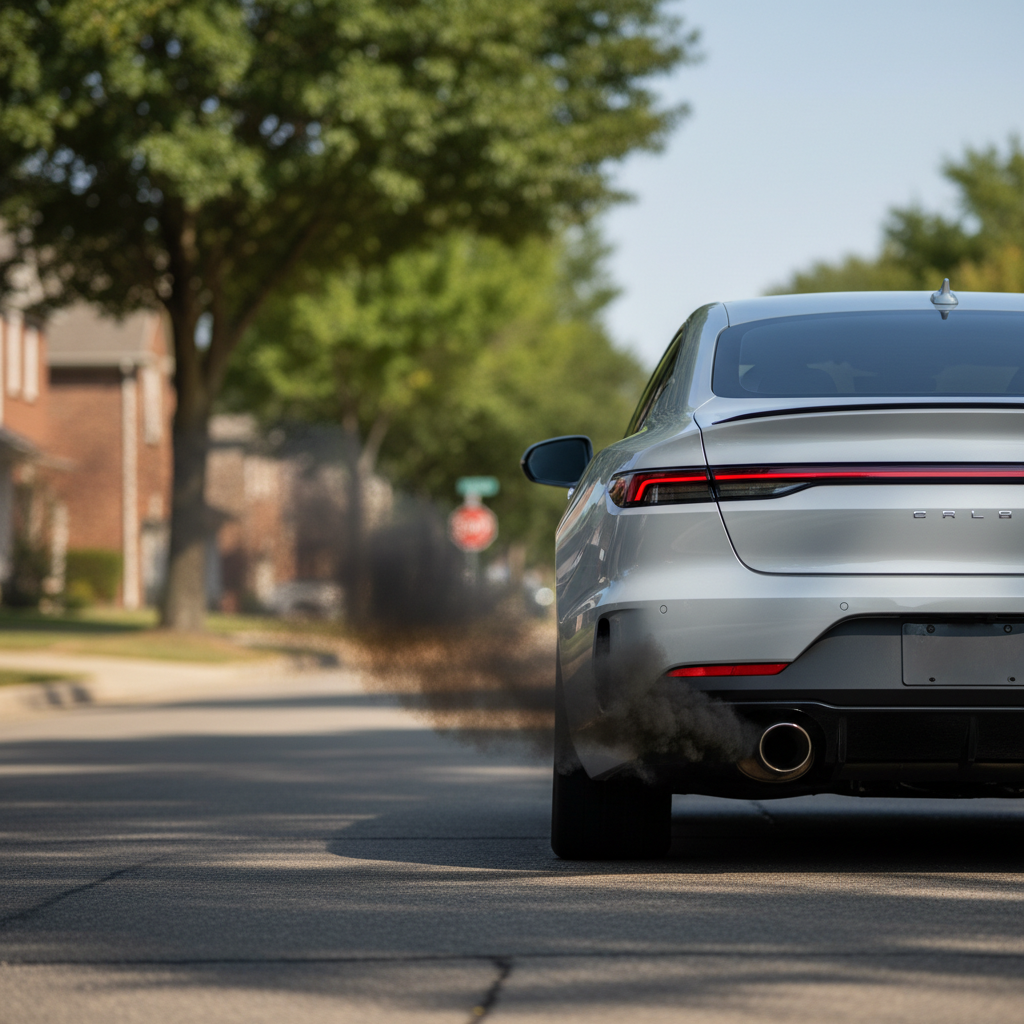
What black smoke from the exhaust usually means
Black smoke is unburned or partially burned fuel leaving the tailpipe as soot. On most cars, that points to a rich air-fuel mixture (too much fuel, not enough air) or a control system that’s “telling” the engine to add fuel when it shouldn’t.
One quick reality check: a small puff during a hard acceleration can happen on some turbocharged or older engines, but steady black smoke at idle, cruising, or normal takeoff is a sign to investigate.
Black vs. white vs. blue smoke (fast differentiation)
- Black smoke: excess fuel, restricted air, injector issues, sensor control problems.
- White smoke: often coolant/condensation; thick sweet-smelling white smoke can be coolant burning.
- Blue smoke: oil burning (rings, valve seals, turbo seals).
If you’re not sure which color you’re seeing, a short phone video in daylight helps a lot, especially when you show the first start of the day and a warm idle.
Common causes: what actually creates a rich condition
People jump straight to “bad engine,” but black smoke is more often a fuel/air metering problem. Here are the usual suspects in real-world shop diagnosis.
- Restricted air intake: dirty air filter, collapsed intake hose, clogged intake snorkel, blocked air box.
- Faulty MAF or MAP sensor: the engine computer miscalculates airflow and adds too much fuel.
- Bad oxygen sensor (O2) or fuel trim control: the system tries to correct mixture but “learns” the wrong direction.
- Leaking or stuck fuel injector: a cylinder gets extra fuel, causing soot and misfire.
- High fuel pressure: failed fuel pressure regulator or returnless system issue.
- EVAP purge valve stuck open: pulls fuel vapor continuously, enriching mixture, sometimes worse at idle.
- Turbo/boost control issues (some vehicles): underboost reduces air, the commanded fuel becomes too high.
- Diesel-specific: EGR issues, clogged air path, injector balance, DPF/regen problems depending on model.
According to U.S. EPA, vehicle emission control systems are designed to keep tailpipe pollutants low, so visible black smoke often signals the engine or emissions controls are not operating as intended and should be diagnosed.
Quick self-check list: identify your most likely scenario
Before buying parts, spend 10 minutes narrowing the pattern. It reduces guesswork and helps a shop diagnose faster if you end up going in.
Symptoms that point to “air restriction”
- Black smoke gets worse when you accelerate
- Engine feels flat, like it can’t breathe
- Air filter looks dark, dusty, or damp
Symptoms that point to “sensor or control”
- Check Engine Light on, or intermittent
- Rough idle that comes and goes
- Fuel economy drops noticeably over a week or two
Symptoms that point to “injector or fuel pressure”
- Strong fuel smell at idle
- Hard start after sitting (flooding)
- Misfire codes, or one spark plug looks much darker than the others
Do this first: pull OBD-II codes and freeze-frame data
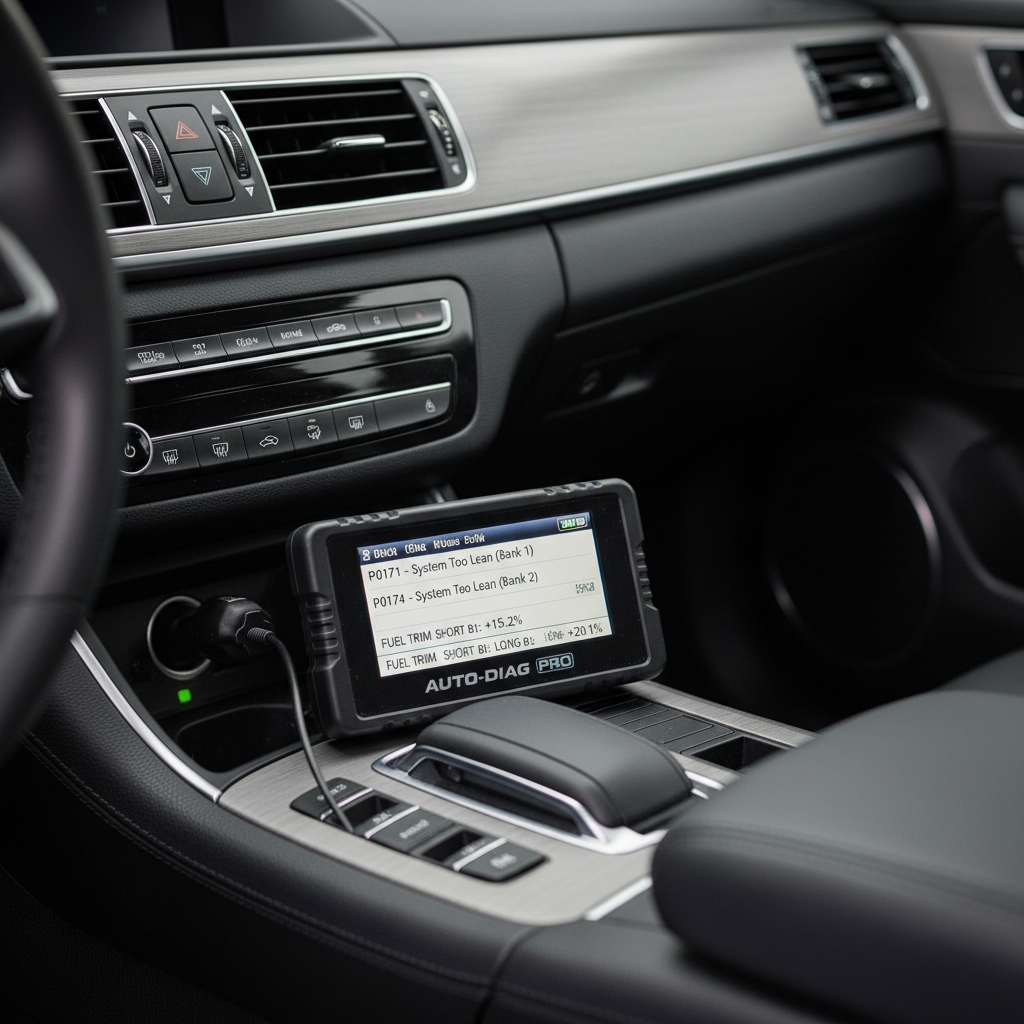
If you’re in the US, an inexpensive OBD-II scanner (or a parts store scan) can reveal rich-condition codes like P0172/P0175, misfires P0300–P030x, MAF-related codes, O2 sensor performance codes, or EVAP purge codes.
Don’t ignore freeze-frame info (engine temp, RPM, load) because it tells you when the car decided something was wrong.
Fixes you can try at home (and what to avoid)
Some fixes are low-risk and genuinely worth doing before deeper diagnostics. Others are “parts cannon” moves that waste money.
1) Check and replace the engine air filter
- Inspect the filter; if it’s packed with debris, replace it.
- Check the air box for leaves, rodent nests, or a mis-seated filter edge.
This is the simplest answer to how to fix car engine black smoke from exhaust when the issue appears after dusty driving, wildfire smoke exposure, or long intervals between services.
2) Inspect intake ducts and vacuum/boost hoses
- Look for collapsed or cracked intake tubing after the air filter.
- On turbo engines, check charge pipes and clamps; a leak can reduce air actually reaching the cylinders.
3) Clean the MAF sensor (if your car uses one)
- Use MAF-specific cleaner, not brake cleaner or carb cleaner.
- Let it dry fully before reinstalling.
Many cars tolerate a careful MAF cleaning well, but if the sensor is failing electrically, cleaning won’t save it. If codes return quickly, you’re likely beyond a simple clean.
4) Stop using “miracle” fuel additives as a first move
Additives can help in some deposit-related injector cases, but they rarely fix a sensor bias, a stuck purge valve, or high fuel pressure. If you’re troubleshooting, keep the variables low and change one thing at a time.
Targeted repairs by root cause (step-by-step)
Once you have symptoms and codes, the most efficient fix is the one aimed at the actual failure mode.
Rich codes P0172/P0175: a practical decision path
- If fuel trims are strongly negative (computer pulling fuel), suspect leaking injectors, high fuel pressure, purge valve stuck open, or MAF bias.
- If trims swing and O2 sensors look “stuck”, suspect upstream O2 sensor issues or exhaust leaks affecting readings (model-dependent).
MAF/MAP issues
- Confirm the air filter and ducts are correct and sealed.
- If cleaning doesn’t help, test with scan data (grams/sec for MAF, kPa for MAP) against expected values for your engine size.
- Replace only if readings are clearly implausible or you have strong supporting codes.
Fuel injector leaks or imbalance
- Look for a single-cylinder misfire paired with a sooty plug tip.
- A shop can do injector balance tests, leak-down, or use a borescope to see wash-down patterns.
- Many cases end with replacing one injector, or a matched set depending on platform and mileage.
Fuel pressure regulator / high fuel pressure
- Verify fuel pressure with a gauge if your vehicle supports it; compare to manufacturer spec.
- If pressure is too high, regulator, pump module, or return line design may be involved.
EVAP purge valve stuck open
- Common clue: rough idle after fueling, or rich at idle with few other issues.
- Test by commanding purge on/off with a scan tool, or checking if purge flow occurs when it shouldn’t (method varies).
At-a-glance table: symptom to likely cause to next action
| What you notice | Likely cause (common) | Good next check |
|---|---|---|
| Black smoke + poor acceleration | Air restriction, boost leak, MAF bias | Air filter, intake ducts, scan MAF/MAP data |
| Black smoke at idle + fuel smell | Injector leak, high fuel pressure, purge valve stuck open | Fuel trims, misfire counters, fuel pressure test |
| Check Engine Light + P0172/P0175 | System too rich (bank-specific) | Inspect intake, EVAP purge, sensor plausibility |
| Sooty tailpipe + worse MPG over time | O2 sensor aging, MAF drift, thermostat stuck open (some models) | Monitor closed-loop behavior, coolant temp data |
| Diesel black smoke under load | EGR/airflow issue, injector, boost control | Check air path, boost leaks, professional diesel scan |
Common mistakes that keep the smoke coming back
- Replacing O2 sensors just because of black smoke: O2 sensors report mixture, they’re not always the cause of rich running.
- Ignoring air leaks after the MAF: unmetered air changes calculations and can create odd fuel trim behavior depending on strategy.
- Cleaning a throttle body to fix a rich condition: it can help idle in some cases, but it’s rarely the main reason for soot.
- Clearing codes without recording them: you lose the story the ECU captured.
- Driving for weeks with active misfires: this can overheat and damage the catalytic converter, repair costs climb fast.
When to stop DIY and get professional help
If the car drives normally and only smokes slightly, you can often start with air intake checks and code reading. But certain conditions deserve a quicker handoff.
- Flashing Check Engine Light or strong misfire, especially under load
- Raw fuel smell near the car, or signs of fuel leaking
- Black smoke plus hard starting or stalling in traffic
- Modern turbo engines where boost, fuel pressure, and sensors interact tightly
According to NHTSA, engine stalling can increase crash risk, so if your vehicle stalls or loses power unpredictably, it’s smart to schedule diagnosis promptly and drive cautiously or arrange towing if needed.
Practical action plan (what I’d do this weekend)
- Step 1: Pull OBD-II codes and note freeze-frame.
- Step 2: Check air filter, air box, intake tube seating, obvious cracks.
- Step 3: Look at live data: coolant temp (warm), short/long fuel trims, MAF/MAP readings.
- Step 4: If evidence points to it, clean MAF and re-check trims.
- Step 5: If trims stay heavily negative, prioritize purge valve and fuel pressure/injector leak testing.
If you’re trying to learn how to fix car engine black smoke from exhaust without guessing, this sequence keeps you from buying parts blindly and usually gets you to a confident “yes/no” on the big causes.
Key takeaways
- Black smoke usually means rich running, not “engine is done.”
- Start with air supply and OBD-II data, then move to fuel pressure, purge, and injectors.
- If you have misfires or a flashing CEL, treat it as time-sensitive to protect the catalytic converter.
Once you see a pattern in codes and fuel trims, the fix becomes much less mysterious. Start with the quick checks, document what you find, then decide whether you can handle the next step or prefer a shop to test fuel pressure and injector behavior.
FAQ
Why does my car blow black smoke when I accelerate?
Acceleration demands more air and fuel, so any airflow restriction, boost leak, or fueling error shows up more clearly. Check the air filter and intake ducting first, then use OBD-II data to see if the engine is pulling fuel (negative trims).
Can a dirty air filter cause black smoke from the exhaust?
Yes, a clogged filter can limit airflow and make the mixture richer than intended. It’s not the cause in every case, but it’s cheap and quick to confirm, which is why it’s a good starting point.
Is it safe to drive with black smoke coming from my tailpipe?
Sometimes you can drive a short distance to diagnose, but steady black smoke often means excess fuel, which can foul spark plugs and stress the catalytic converter. If the Check Engine Light flashes, or the car stumbles, it’s safer to limit driving and consider professional diagnosis.
Will replacing spark plugs fix black smoke?
New plugs can help a misfire caused by worn ignition parts, but they don’t usually fix the reason the engine went rich. If plugs are sooty, treat that as a clue and keep looking for the underlying air/fuel issue.
What OBD-II codes are common with black smoke?
P0172/P0175 (system too rich) are common, along with misfire codes (P0300–P030x), MAF codes, and sometimes EVAP purge-related codes. The specific combination matters more than any single code.
Can a bad oxygen sensor cause black smoke?
It can, especially if the sensor response is slow or biased and the ECU adds fuel incorrectly. But O2 sensors also get blamed when the real issue is a leaking injector, high fuel pressure, or an intake problem, so it’s worth verifying with scan data.
How do I know if an injector is leaking?
Common hints include fuel smell, hard starts after sitting, one cylinder misfire, and a single plug that looks much darker. Confirming it usually takes pressure tests or injector balance testing, which many shops can perform.
Does black smoke always mean the catalytic converter is bad?
Not always. Rich running can damage a converter over time, but the converter is often a victim, not the cause. Fix the rich condition first, then re-check for converter efficiency codes if they appear.
If you’re tracking down black smoke and want a more straightforward path, a basic OBD-II scanner with live data support and a simple checklist often saves time, and if the numbers still don’t add up, a reputable local shop can confirm fuel pressure and injector behavior without guessing.