
Best spark plugs for fuel economy usually come down to one thing: getting the right plug type and heat range for your exact engine, then installing it correctly so the ignition system can light the mixture efficiently. If your MPG has been drifting down, the fix is not always “buy the most expensive plugs”, it’s often correcting wear, gap, or a mismatch that keeps combustion from happening as cleanly as it should.
Spark plugs are small, but they sit at the center of a chain that affects fuel use: ignition voltage, timing, air-fuel mixture, and engine load. When plugs wear or the wrong style gets installed, the engine can misfire slightly under load, idle rough, or just feel “lazy” on the highway, and that wasted fuel adds up over time.
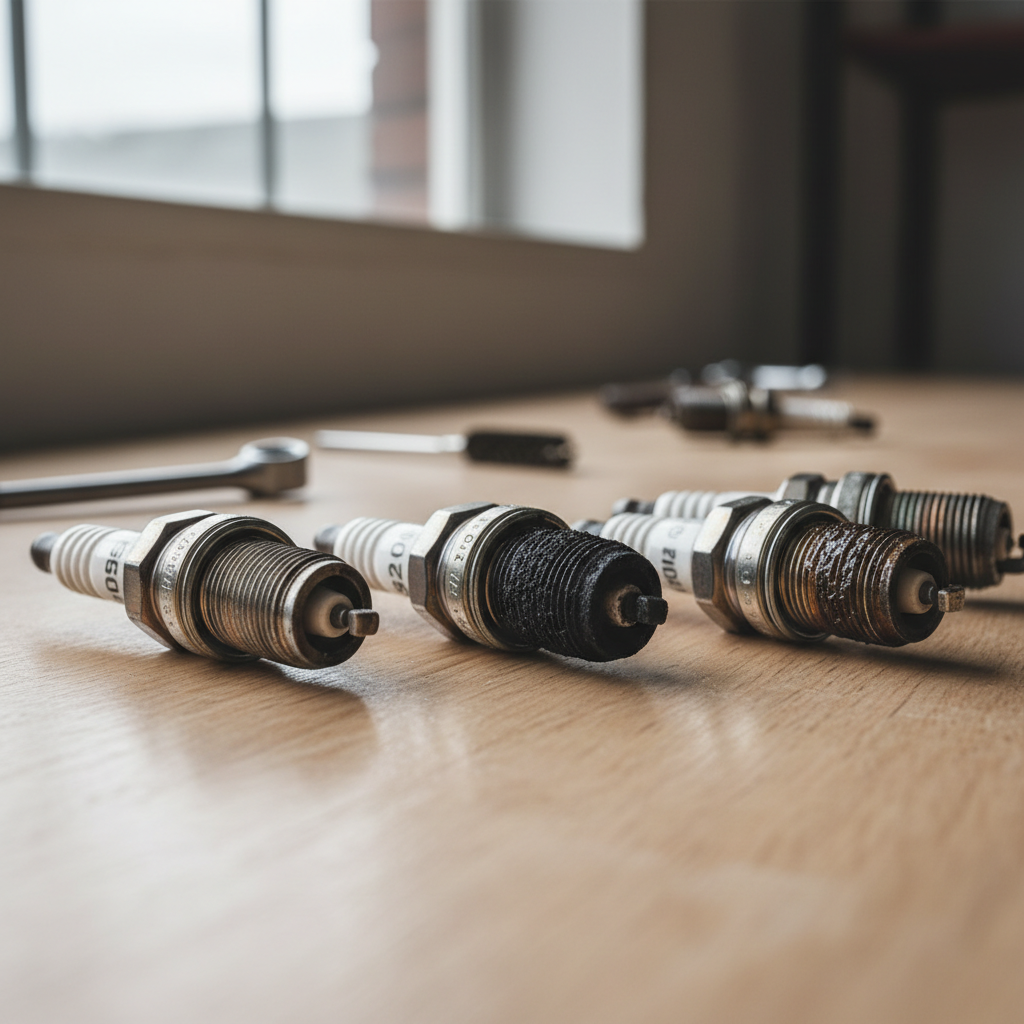
This guide helps you choose plugs that make sense for fuel economy, spot when plugs are the real issue, and avoid the common mistakes that waste money and sometimes create new drivability problems. No hype, just practical selection and install notes.
What “fuel-economy spark plugs” really means
A spark plug does not magically create MPG on its own, it helps your engine maintain consistent ignition. When the spark is strong and repeatable, the engine needs fewer corrections from the ECU, and combustion tends to be more complete, especially during cold starts, stop-and-go driving, and light throttle cruising.
In most daily-driver situations, the “best” plug for MPG is simply the OEM-equivalent plug in the correct design and heat range, installed at the right gap and torque. If the plug matches what the engine expects, the ignition system runs in its comfort zone.
- Correct heat range keeps the tip hot enough to resist fouling, but not so hot it risks pre-ignition.
- Correct design (projected tip, resistor type, reach) ensures the spark occurs where the chamber design expects it.
- Stable electrode material (often iridium or double platinum) holds its gap longer, keeping performance consistent.
How spark plug condition can hurt MPG (common real-world causes)
If you are chasing fuel economy, it helps to recognize how plugs typically cause losses. The theme is inefficiency: incomplete burn, extra enrichment, or misfire corrections.
- Gap growth from wear: the coil must work harder to jump a larger gap, and misfires can show up under load.
- Fouling: carbon or oil deposits can weaken the spark path, leading to rough idle and wasted fuel at low speeds.
- Wrong plug type: a mismatched heat range or incorrect reach can cause repeated corrections, knock, or poor throttle response.
- Improper torque: too loose can reduce heat transfer and invite misfires, too tight can damage threads and distort the plug.
According to the U.S. Department of Energy, fixing car maintenance issues such as a serious engine misfire can improve fuel economy, which is why it makes sense to treat ignition problems as an MPG issue, not just a “runs rough” issue.
Which plug material is best for fuel economy: copper vs platinum vs iridium
You will see advice like “iridium equals better MPG.” Reality is more nuanced. Material affects how long the plug holds its spec and how well it resists erosion, not the engine’s base efficiency. Still, for most modern US vehicles, long-life plugs tend to support stable MPG over time because the gap stays closer to spec.
| Plug type | What it’s good at | Fuel-economy angle | Typical fit |
|---|---|---|---|
| Copper (nickel) | Strong conductivity, low cost | Can run great when fresh, but wear faster so MPG consistency may fade sooner | Older engines, performance builds, some specific OEM specs |
| Single/Double Platinum | Better wear resistance than copper | Good long-term stability in many distributorless and waste-spark systems | Many 90s–2000s vehicles, OEM-equivalent replacements |
| Iridium (often fine-wire) | Excellent erosion resistance, long service life | Helps keep gap stable longer, supports consistent ignition as miles add up | Many modern engines that specify iridium |
Key point: if your owner’s manual calls for iridium, sticking with an OEM-style iridium plug is usually the most direct path to maintaining fuel economy over the full service interval. If the manual calls for platinum, “upgrading” to a random iridium design can be hit-or-miss unless it is a verified equivalent.
Quick self-check: are spark plugs likely the reason your MPG dropped?
This list is not a diagnosis, but it helps you decide whether plugs deserve attention now, or whether you should look elsewhere first.
- MPG drop + rough idle, especially when cold
- Hesitation under load like climbing a hill or merging
- P0171/P0174 lean codes or misfire codes (P0300–P0308) showing up intermittently
- Plugs overdue by mileage or time, or service history unknown
- Hard starts or longer crank time than usual
- Noticeable fuel smell at idle (can be many causes, but misfire is on the list)

If none of these apply and the car drives smoothly, spark plugs might not be your main MPG lever. Tires, alignment, fuel trims, stuck brakes, and driving pattern changes often move the needle more.
How to choose the best spark plugs for fuel economy (without overbuying)
Here is the selection approach that tends to work in the real world, especially if you want MPG consistency and fewer surprises.
1) Start with OEM spec, then pick the equivalent brand line
Look up the plug using your VIN, exact engine code, or the manufacturer’s spec. The “best spark plugs for fuel economy” are usually the ones that match what the ignition system was designed around.
- Match heat range, thread reach, seat type (tapered vs gasket), and resistor requirement.
- If your car uses coil-on-plug, long-life iridium often makes sense when it is the specified type.
- If your vehicle uses a waste-spark system, double platinum is commonly recommended because both electrodes can see wear.
2) Avoid “one-size performance” plugs unless you know the goal
Multi-ground, exotic designs, and aggressive “performance” claims can be fine in some setups, but for a stock commuter car they may not add MPG, and sometimes they create subtle issues like radio noise, inconsistent idle, or knock sensitivity if heat range differs.
3) Consider service interval and labor cost
If your engine is easy to access, a shorter-life plug is less painful. If it’s a V6 with a tight rear bank, paying once for longer-life plugs can be the smarter “fuel economy” choice indirectly, because you are more likely to keep the ignition in spec over time.
Installation details that matter for MPG (and why people get stuck here)
Plugs can be perfect on paper and still fail to help if installation is sloppy. This is where many “I replaced my plugs and nothing changed” stories come from.
- Gap: many iridium plugs come pre-gapped, but shipping and handling can alter the gap. Verify it matches spec. Don’t pry on fine-wire tips.
- Torque: use the correct torque spec. Over-tightening can damage threads or distort the plug seat, under-tightening can cause heat transfer issues.
- Coil boots: inspect boots for carbon tracking and cracks. A new plug won’t fix a leaking boot that bleeds spark to ground.
- Dielectric grease: use sparingly on the boot if recommended, not on the electrode or threads unless the plug maker says so.
- Anti-seize: modern plugs often have plated threads. Many manufacturers caution against anti-seize because it can change torque readings. Follow the plug manufacturer’s guidance.
According to NGK, using the correct spark plug type and installing it properly helps avoid misfires and other drivability issues, which is exactly what you want when you are chasing steady fuel economy rather than a temporary “feels better” moment.
Practical MPG-focused steps: a simple plan that usually works
If you want a straightforward approach, this sequence keeps you from chasing your tail.
- Step 1: Scan for codes and check fuel trims if you have a basic OBD-II tool. Misfires and abnormal trims can point you to ignition vs intake leaks.
- Step 2: Replace plugs only if they are due, worn, fouled, or mismatched. Use OEM-equivalent part numbers.
- Step 3: Inspect coils, wires (if applicable), and boots. If a coil is weak, new plugs can expose the problem rather than solve it.
- Step 4: After install, drive a few normal cycles and re-check for pending codes. MPG readings can take time to stabilize.

Quick reality check: if your old plugs were still in decent shape, you might feel smoother idle but see only a small MPG change. Big MPG gains usually happen when plugs were causing misfires, heavy fouling, or a noticeable loss of spark energy.
Mistakes that often waste money (or reduce MPG)
- Buying the “hottest” or “coldest” plug without understanding heat range. This can cause fouling or knock risk, depending on direction.
- Mixing plug types across cylinders. Engines like consistency, especially for smooth trims and idle control.
- Ignoring the root cause of fouling. If plugs oil-foul, you may have an underlying issue that new parts won’t solve.
- Over-gapping for a “bigger spark.” Many modern coils and ECUs are calibrated for a specific gap window.
- Skipping boots and connectors. A $10 boot can undo the benefit of a $60 set of plugs.
When to get professional help
If you see repeated misfire codes, persistent fuel smell, knocking, or severe rough running, it is smart to involve a qualified mechanic. Misfires can overheat catalytic converters, and drivability issues sometimes come from coils, injectors, vacuum leaks, or compression problems rather than spark plugs alone.
If you are not comfortable working around hot engines, aluminum threads, or tight access areas, a shop can save you from thread damage and broken plugs. In many cases, that peace of mind is worth more than squeezing out a small MPG change.
Conclusion: the “best” choice is the one your engine expects
The best spark plugs for fuel economy are usually OEM-equivalent iridium or platinum plugs that match your engine spec, installed with the right gap and torque, and paired with healthy coils or wires. If your MPG loss comes from ignition inconsistency, plugs can genuinely help, but if the car already runs clean and smooth, the bigger gains often come from tires, alignment, and fixing codes that push the engine into compensations.
If you want one action to take today, pull your maintenance schedule and verify the exact plug spec for your engine, then decide whether you are replacing due parts or troubleshooting a real symptom. Either way, you will spend with a purpose.