
Best car storage organizers for trunk groceries are the ones that stop bags from tipping, keep cold items stable, and make unloading feel less like a cleanup job.
If your trunk turns into a rolling pile of paper bags, loose produce, and mystery leaks, it’s usually not because you “need to be more careful.” It’s because most trunks are smooth, open spaces with nothing to brace items against, so every turn becomes a stress test.
This guide breaks down organizer types that work well for groceries, what features matter in real use, and a simple way to choose a setup that fits your car and shopping habits, without overbuying.
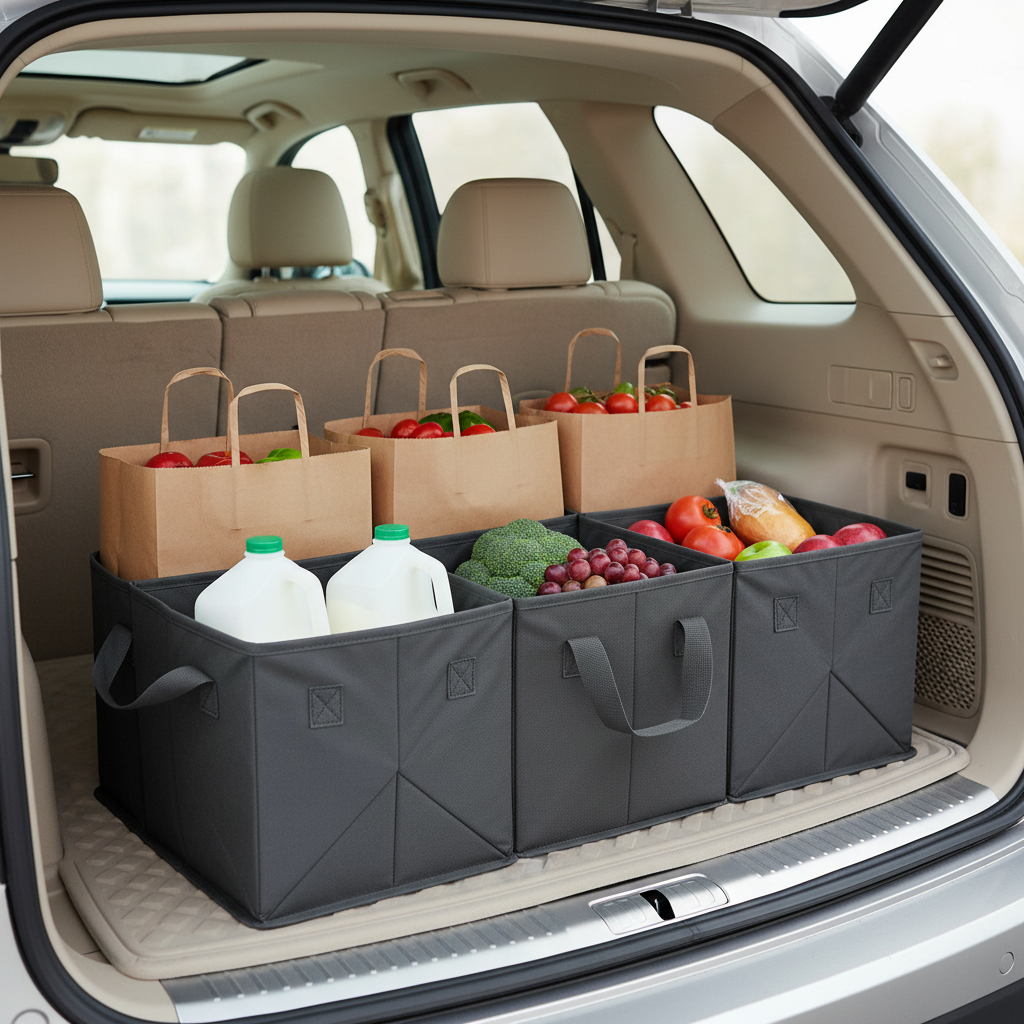
What makes groceries fall over (and how organizers fix it)
Most grocery chaos comes from a few predictable trunk problems. Once you spot which one you have, the organizer choice gets easier.
- No friction: trunk liners and carpet still let bags slide, especially on turns and quick stops.
- No structure: paper bags collapse, reusable bags flop, and weight shifts into the weakest side.
- Temperature mix: cold items, frozen goods, and pantry items get stacked together, so insulation never really works.
- Small loose items: limes, spice jars, yogurt cups, and eggs get lost in gaps, then crushed.
An organizer adds walls, grip, and separation. Some also add insulation, tie-downs, or “pockets” that keep small items from migrating.
Quick self-check: which trunk-grocery setup fits you?
Before you shop, answer these quickly. Your “yes” answers point to the right organizer style.
- You buy heavy staples (milk, detergent, bulk cans) weekly.
- You regularly carry cold/frozen items for 20+ minutes.
- Your trunk is also used for strollers, sports gear, tools, so storage must fold down fast.
- You have a sedan trunk with limited height and awkward corners.
- You park on inclines or drive curvy roads where bags tip easily.
If you’re mostly doing small runs, a simple crate-style bin can be enough. If you do big hauls or drive longer distances, structure plus insulation starts to matter more.
Types of trunk grocery organizers (pros, cons, best uses)
“Organizer” is a broad label. Here are the common types that actually show up in trunks, plus when they’re worth it.
1) Collapsible trunk organizer with compartments
This is the classic: a foldable box with 2–3 compartments, sometimes with side pockets.
- Best for: mixed grocery runs, families, weekly errands.
- Why it works: compartments brace bags so they don’t slump into each other.
- Watch for: flimsy walls that bow under gallons of milk.
2) Rigid crate or plastic tote (with grippy bottom)
Less “pretty,” more durable. Great if you’re rough on gear.
- Best for: heavy loads, Costco-style bulk items, messy containers.
- Why it works: rigid walls don’t collapse, easy wipe-down.
- Watch for: sliding; you may need a liner, Velcro strips, or tie-down points.
3) Insulated grocery bag insert / cooler tote
This is for temperature control, not structure. It pairs well with a trunk organizer.
- Best for: summer errands, frozen foods, ice cream, meal prep pickups.
- Why it works: reduces heat gain and keeps cold items grouped.
- Watch for: zipper failure and thin insulation that only helps for short trips.
4) Trunk net, cargo net, or bungee restraint system
Good as a “seatbelt” for groceries, especially when you don’t want a big box taking up space.
- Best for: small loads, odd-shaped items, keeping a few bags from tipping.
- Why it works: holds items against the seat-back or trunk wall.
- Watch for: nets don’t separate items, they just prevent major movement.
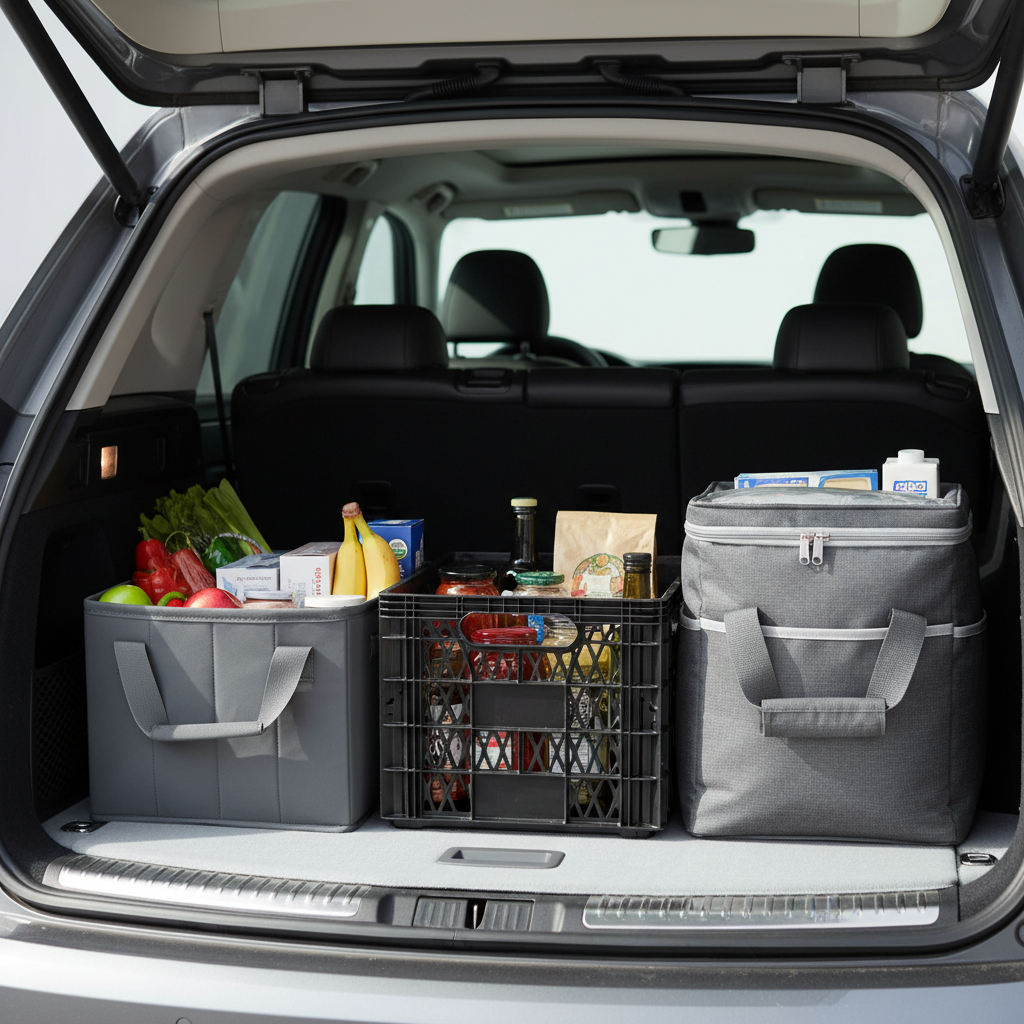
Feature checklist: what matters when choosing the best option
Product listings can look identical, so it helps to focus on a handful of features that show up in daily use.
- Structure and stiffness: thicker panels, reinforced seams, and solid base inserts handle heavy staples better.
- Non-slip or anchoring: Velcro strips (for carpeted trunks), rubberized bottoms, or straps that clip to tie-downs reduce sliding.
- Compartment layout: two large bays beat many tiny pockets if you use paper grocery bags.
- Fold-flat speed: if you need trunk space often, avoid bulky rigid bins unless they stack well.
- Cleanability: spills happen, so wipeable liner surfaces help, especially with meat packaging.
- Handles that don’t cut your hands: wider, padded handles matter more than you’d think.
According to the National Highway Traffic Safety Administration (NHTSA), loose cargo can become a hazard during sudden stops, so anything you choose should help reduce movement and keep heavy items from becoming projectiles.
At-a-glance recommendations table (match by use case)
Instead of naming specific brands (which change constantly), this table shows what tends to work by scenario.
| Use case | Organizer style | Key features to prioritize | Common mistake |
|---|---|---|---|
| Weekly family grocery run | Collapsible 2–3 compartment organizer | Reinforced walls, non-slip base, side pockets | Buying extra-large size that never gets filled, then it slides anyway |
| Bulk shopping (warehouse clubs) | Rigid crate/tote + optional net | Rigid structure, wipeable interior, stacking | Using soft organizers that bow under heavy items |
| Long drive home with frozen items | Organizer + insulated cooler tote | Insulation thickness, good zipper, easy carry | Expecting insulation to fix shifting without structure |
| Small frequent store trips | Trunk net or small bin | Easy install, quick access, minimal footprint | Overbuilding a system that’s annoying to use |
| Shared trunk (sports gear, stroller) | Fold-flat organizer or modular bins | Fast fold, lightweight, handles | Leaving permanent bulky storage that blocks other gear |
How to set up your trunk for groceries (simple, practical steps)
Even the best organizer won’t help much if it’s placed awkwardly or loaded in the wrong order. This setup usually holds up in real driving.
Step 1: Pick a “brace wall” location
Place the organizer tight against the seat-back or a flat trunk wall, not floating in the middle. If your trunk has tie-down loops, align the organizer so straps can reach them.
Step 2: Load heavy items low and toward the center
Milk, juice, canned goods, and detergent should sit at the bottom. If weight sits high or on one side, bags tip more easily.
Step 3: Separate crushable items
Use a smaller bin, side pocket, or a dedicated reusable bag for eggs, bread, chips, berries, and herbs. This is the part most people skip, then blame the organizer.
Step 4: Add temperature control only where it counts
Put frozen and refrigerated items in an insulated tote inside one compartment, so it stays upright. If you use ice packs, keep them sealed to avoid trunk moisture.
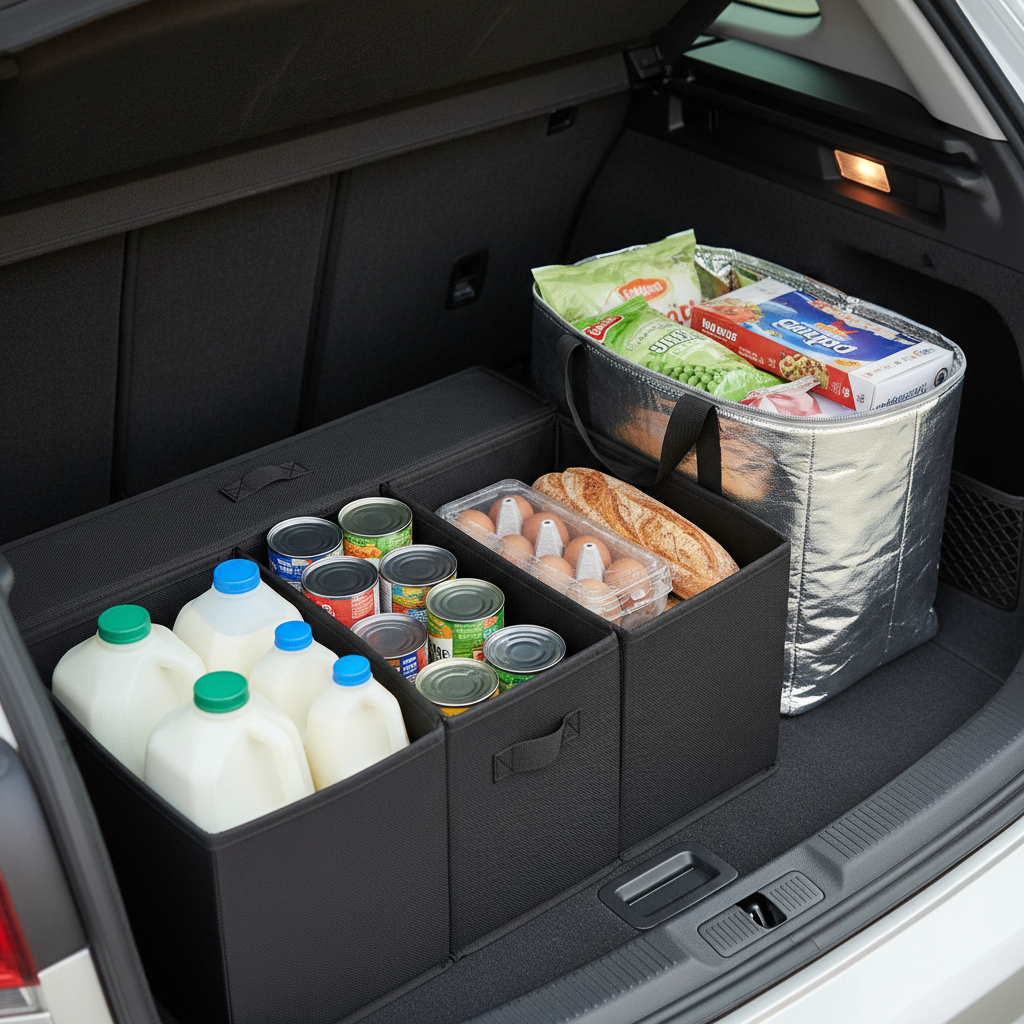
Common mistakes (and quick fixes)
When people say trunk organizers “don’t work,” it’s often one of these.
- Too big for your typical load: the organizer becomes a loose box. Fix: size down or add a net to hold it in place.
- No anchoring in a slick trunk: everything slides together. Fix: choose Velcro-backed base for carpet, or use straps to tie-down loops.
- Relying on paper bags alone: paper collapses under weight shifts. Fix: drop bags into compartments or use structured reusable bags.
- Mixing raw meat with everything else: spills become a sanitation headache. Fix: keep a washable bin or leak-resistant bag dedicated to meat/seafood.
- Ignoring emergency braking reality: heavy items can move forward. Fix: keep heavy items braced and restrained whenever possible.
Key takeaways (so you can buy once)
- Structure beats “more pockets” for most grocery runs.
- The best car storage organizers for trunk groceries usually include stiff walls + a way to anchor (Velcro, straps, or grippy base).
- For cold items, pair an organizer with an insulated tote instead of expecting one product to do everything.
- If you share trunk space, prioritize fast fold-flat and easy lift handles.
When you match the organizer to your real routine, grocery trips get calmer: fewer spills, less squishing, faster unload, and a trunk that doesn’t feel like a second pantry.
FAQ
What size trunk organizer is best for groceries?
For most people, a medium organizer with two large compartments is easier to fill consistently than an oversized one. If you often shop in bulk, you may prefer a larger organizer or two modular bins.
Do trunk organizers actually stop groceries from tipping?
They help a lot when they add rigid walls and fit the trunk well. If the organizer itself slides, tipping will still happen, so anchoring matters as much as compartments.
Is a cargo net enough for grocery bags?
A net can be enough for small runs or a couple of bags, especially if you can secure it to tie-down points. For mixed loads with fragile items, a net plus a bin usually works better.
How do I keep frozen food cold on the drive home?
An insulated cooler tote inside your organizer keeps it upright and slows warming. For longer drives or hot days, ice packs can help, but food safety can vary, so consider guidance from trusted sources.
What’s better: collapsible organizer or rigid crate?
Collapsible organizers fit people who want a clean look and fold-flat storage. Rigid crates handle heavy items and spills better, but they take up space full-time unless they stack or nest.
How do I stop an organizer from sliding in my trunk?
If your trunk is carpeted, Velcro-backed bottoms often grip well. If it’s a slick liner, look for rubberized bottoms or use straps clipped to factory tie-down loops.
Are trunk organizers safe in an accident?
Nothing in the trunk is “safe” if it’s loose. The practical goal is reducing movement and restraining heavy items. If you’re unsure about your vehicle’s cargo tie-down points or setup, checking your owner’s manual or asking a professional can be reasonable.
If you’re trying to pick the best car storage organizers for trunk groceries without wasting money on features you’ll never use, start by measuring your trunk floor, noting whether you have tie-down loops, and choosing one organizer style that matches your weekly routine, then add a small insulated tote only if cold items are a regular issue.