
how to apply rain repellent on windshield comes down to one thing most people skip: glass prep that removes road film, wax, and old coating so the new layer can actually bond.
If your last attempt left streaks, glare at night, or patchy beading, it usually wasn’t the product, it was the surface or the cure time. Rain repellents are thin coatings, they behave like paint primer in a way, any contamination underneath shows up as haze on top.
This guide walks through a practical, repeatable process, what to use if you have hard water spots, how to avoid wiper chatter, and how to tell when it’s time to reapply, without turning it into a fussy weekend project.
What rain repellent actually does, and where it helps most
Most windshield rain repellents are hydrophobic coatings, meaning they lower surface energy so water forms tight beads and slides off with airflow. That can improve visibility at highway speeds, and it can reduce how hard your wipers have to work in steady rain.
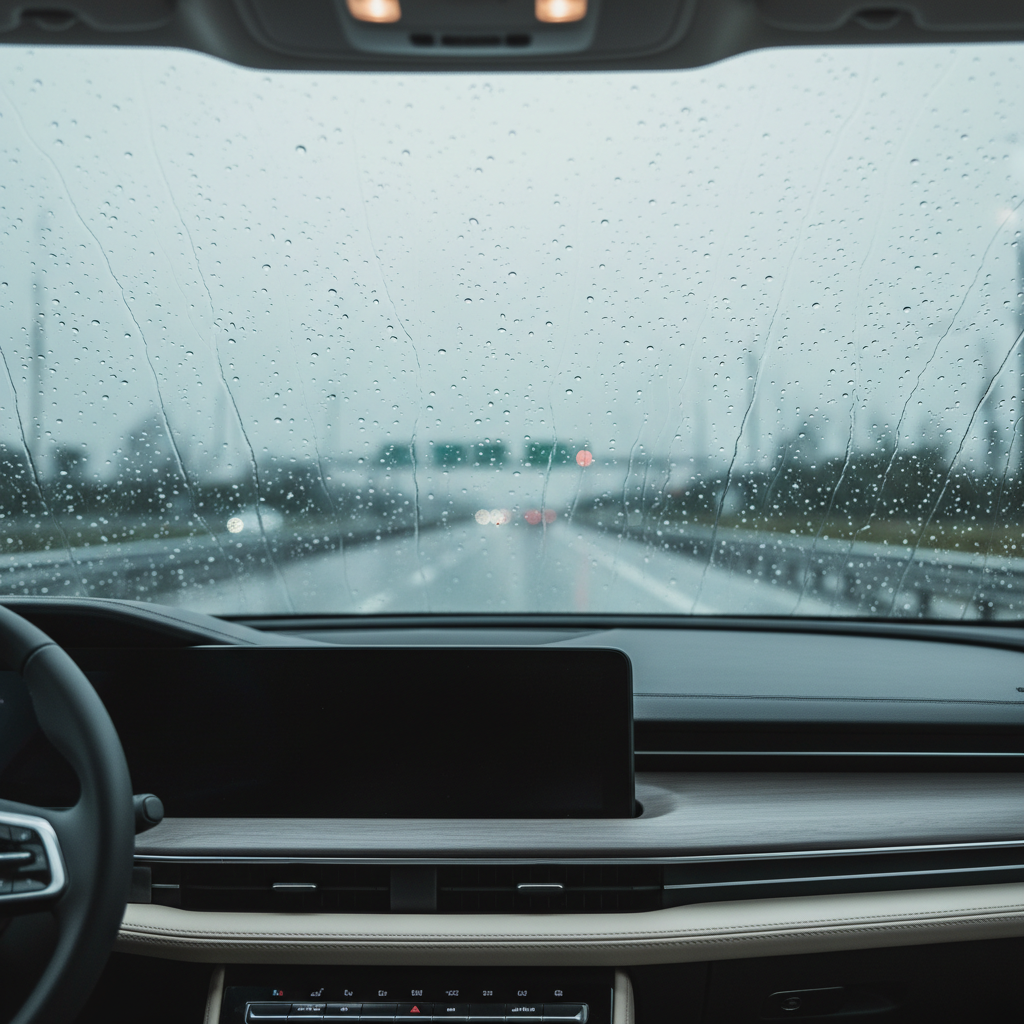
It’s not magic, though. In stop-and-go traffic you still need wipers, and in winter mix conditions, slush and salt spray can overwhelm any coating. Think of it as a visibility helper, not a replacement for good wiper blades and safe speed.
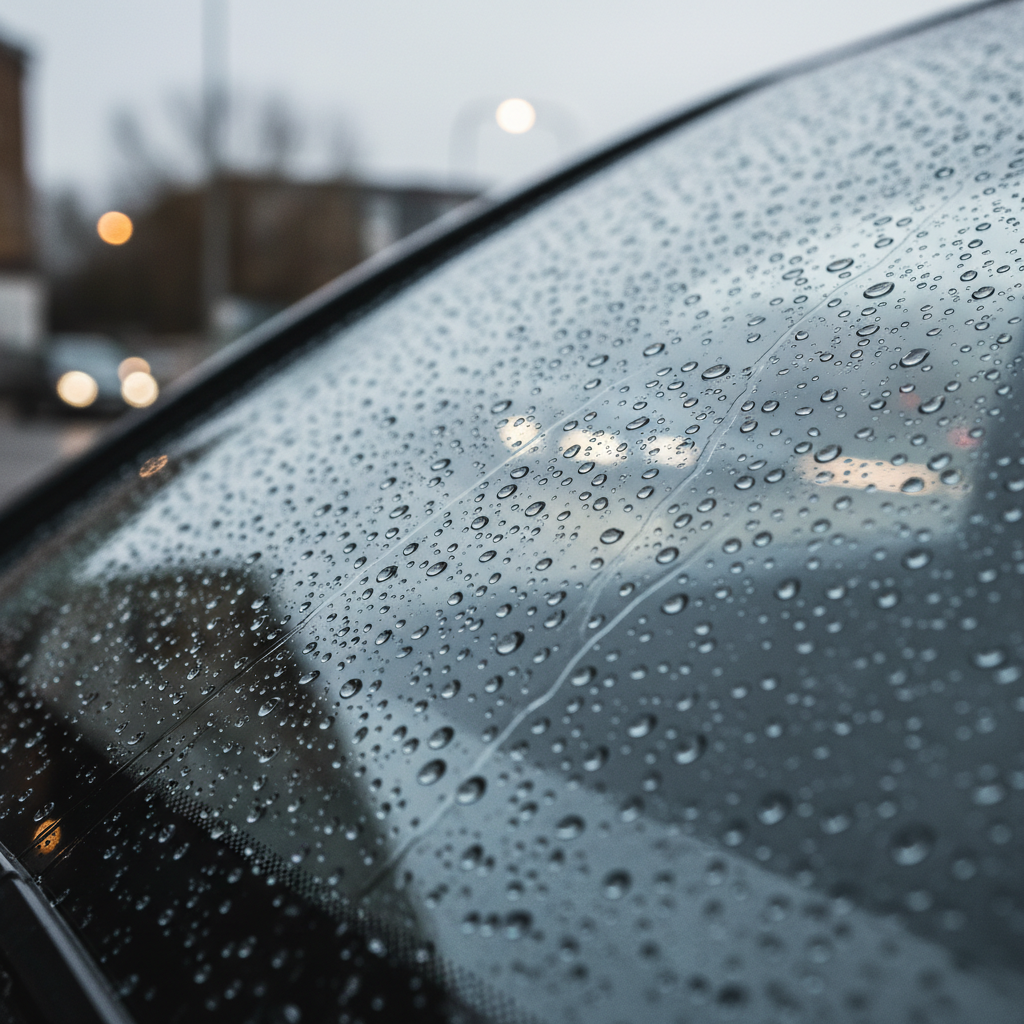
According to the National Highway Traffic Safety Administration (NHTSA), clear visibility is a core part of safe driving, especially in adverse weather, so anything that helps you see better can be worthwhile when used correctly.
Why most applications fail: the real-world causes
When rain repellent looks great for a week and then turns blotchy, a few common culprits show up again and again.
- Dirty glass that “looks” clean: road film, washer fluid residue, and silicone from other products can block bonding.
- Applying in sun or on hot glass: product flashes too fast, then you buff forever and still get haze.
- Too much product: thick layers don’t cure evenly, and they streak under headlights at night.
- Old wiper blades: worn rubber can chatter on a treated windshield and create uneven wipe patterns.
- Hard water spots: mineral deposits break up the coating, so you get “dead zones” where water sticks.
One more thing people rarely connect: some glass cleaners and quick detail sprays leave behind hydrophobic additives. Mixing those with a dedicated repellent can create weird smearing that looks like a bad coating.
Before you start: a quick checklist to see what you’re dealing with
Do this two-minute check before you touch any coating, it saves you from redoing the job.
- Spray test: mist water on the windshield. If it sheets unevenly or grabs in patches, expect contamination or mineral spots.
- Wiper pass: run wipers once on wet glass. If you hear chatter or see skipping, plan to clean blades or replace them.
- Night glare memory: if you’ve noticed starburst glare recently, prioritize polishing/stripping before reapplying.
- Feel test (safe): with clean hands, lightly glide fingers over clean, dry glass. If it feels grabby or waxy, it’s not truly bare glass yet.
If you suspect deep water spot etching, a consumer glass polish may help, but heavy etching sometimes needs a pro detailer to avoid distortion.
Tools and products: what you need (and what you can skip)
You don’t need a shelf of supplies. You do need the right few items so you can clean, apply, and buff without fighting lint and haze.
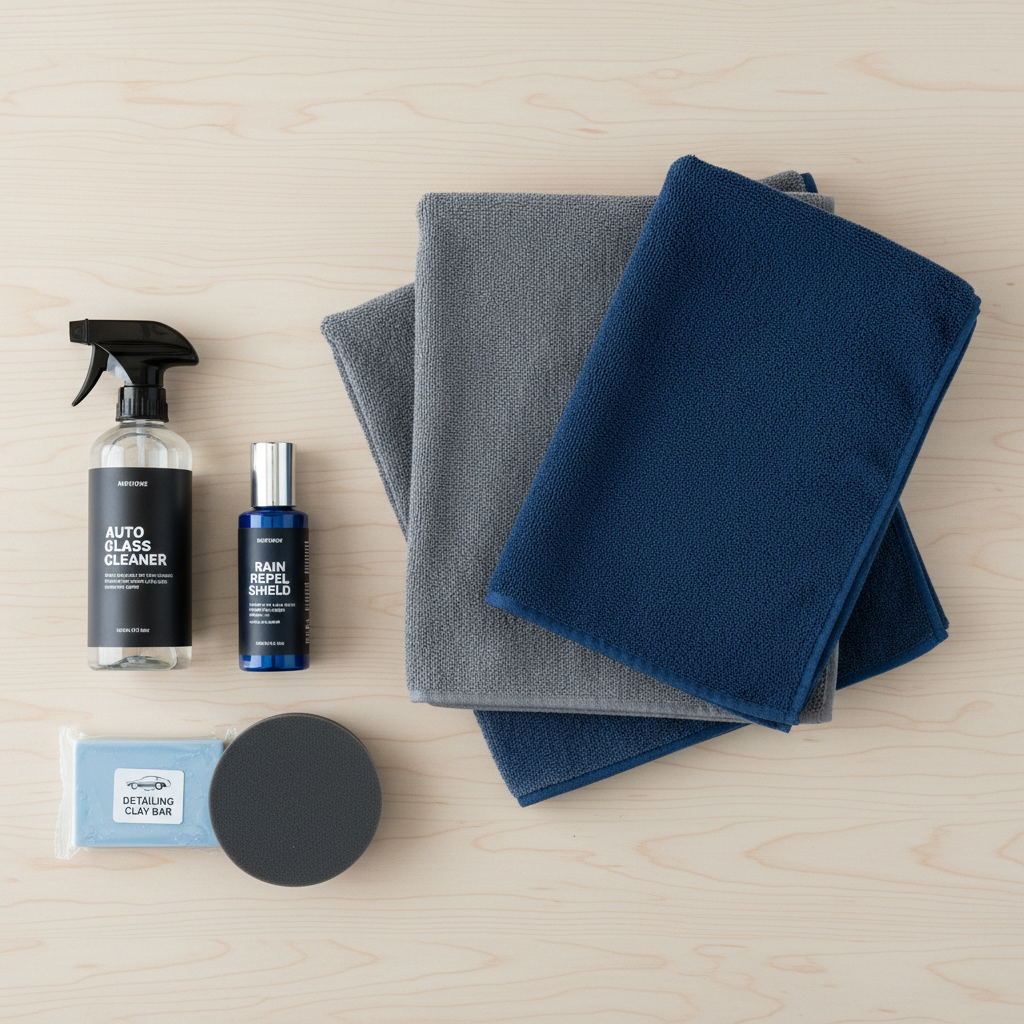
- Automotive glass cleaner (ammonia-free is common, especially if you have tinted glass)
- Clay bar or synthetic clay with lubricant (optional but helpful for road film)
- Glass polish or a dedicated water spot remover (only if needed)
- Rain repellent product (follow its label, since cure times vary)
- Microfiber towels: at least 2, ideally 3, clean and low-lint
- Foam or microfiber applicator (some products include one)
Skip paper towels for final buffing if you can, they often leave lint that looks like streaks under headlights.
Step-by-step: how to apply rain repellent on windshield without streaks
how to apply rain repellent on windshield works best in shade on cool glass. If the windshield feels warm to the touch, wait, or move the car into a garage.
1) Wash and dry, then clean like you mean it
Wash the windshield with your normal car wash method, then dry fully. After that, use an automotive glass cleaner and a clean microfiber towel, wipe in overlapping passes, then flip the towel and do a dry pass to pick up residue.
2) Decontaminate if water behavior looks patchy
If the spray test showed uneven sheeting or random “sticky” spots, clay the glass. Use plenty of lubricant and light pressure, you’re removing bonded grime, not scrubbing. Wipe clean and recheck with a quick mist of water.
3) Spot-treat minerals (only if needed)
For visible water spots, use a dedicated water spot remover or glass polish as directed. Don’t overwork one area for a long time, aggressive polishing can create optical distortion if you get carried away.
4) Apply a thin, even coat
Put a small amount on the applicator, then work in a crosshatch pattern (left-right, then up-down) across half the windshield at a time. You want coverage, not a wet-looking layer. Thin usually wins here.
5) Let it haze, then buff clean
Most products want a short haze period before buffing, but exact timing varies. Buff with a fresh microfiber towel, then do a second “inspection buff” with another towel, especially along edges and near the cowl where residue hides.
6) Optional second coat, only if the label supports it
Some repellents allow layering for durability, some don’t. If a second coat is recommended, apply it after the first coat cures per the instructions, not immediately just because the glass looks dry.
Before driving, make sure the windshield looks clear from the driver seat at multiple angles. If you see faint smear, do another dry buff with a clean towel.
Cure time, wipers, and first drive: what to do in the next 24 hours
This is where good applications turn into great ones. Many streak complaints show up because the coating met washer fluid or wipers too early.
- Avoid washer fluid until the product’s cure window passes, if your schedule allows.
- Hold off on wipers on a dry windshield, dry wiping can create chatter and micro-marring.
- Clean wiper blades with a damp microfiber towel, then dry them, old residue can smear fresh coating.
According to AAA, maintaining wiper blades and keeping glass clean are basic visibility practices, and coatings work best when the fundamentals are already handled.
Troubleshooting table: haze, streaks, wiper chatter, and patchy beading
If something looks off, don’t keep layering more product. Fix the cause, then reapply.
| Symptom | Likely cause | What to do |
|---|---|---|
| Oily haze under headlights | Too much product or buffing too soon | Rebuff with a clean microfiber, if it persists use glass cleaner, then reapply thinner |
| Streaks that won’t wipe away | Applied on hot glass or in direct sun | Strip with glass cleaner, work in shade, smaller sections, lighter coat |
| Patchy beading “dead spots” | Contamination or water spots | Clay or polish affected areas, then apply again for even coverage |
| Wiper chatter or skipping | Worn blades or residue on rubber | Clean blades, consider replacement, avoid dry wiping |
| Smearing with washer fluid | Coating not cured or fluid residue | Wait for cure next time, switch to a quality washer fluid, clean glass and reapply if needed |
How long it lasts, and when to reapply
Durability varies by product, climate, and how often you use wipers. Frequent highway driving in heavy rain can wear coatings faster, and so can gritty winter road spray. Instead of counting weeks, watch performance.
- Reapply soon if water stops beading evenly at speed, or you see inconsistent clearing behind the wipers.
- Don’t rush if it still sheds water well and the glass looks clear at night, adding more can create buildup.
- Maintenance wash helps: regular cleaning reduces grime that “masks” the coating.
If you’re unsure, do a small test spot on the passenger side first. If it improves beading and wipes clean, the windshield is likely ready for a full refresh.
Key takeaways and a realistic next step
how to apply rain repellent on windshield is mostly about restraint: cleaner glass than you think, thinner coating than you think, and more careful buffing than you want to do at the end.
- Prep beats product, decontaminate when water behavior looks uneven.
- Shade and cool glass prevent flash-drying and stubborn haze.
- Clean wipers so the first rain doesn’t smear your work.
If you want the easiest win today, clean the windshield thoroughly, apply a thin coat in two small sections, and do a final inspection buff from the driver seat before you call it done.