best car air purifiers for smoke removal is a search you make when your car smells like cigarettes, wildfire haze, or a one-time “oops” moment that never really left, and you just want the air to feel normal again.
Smoke is tricky because it’s not only odor, it’s also tiny particles and sticky compounds that cling to fabric, vents, and headliners. A basic “freshener” can mask it for an hour, then the smell rebounds the moment the cabin warms up.
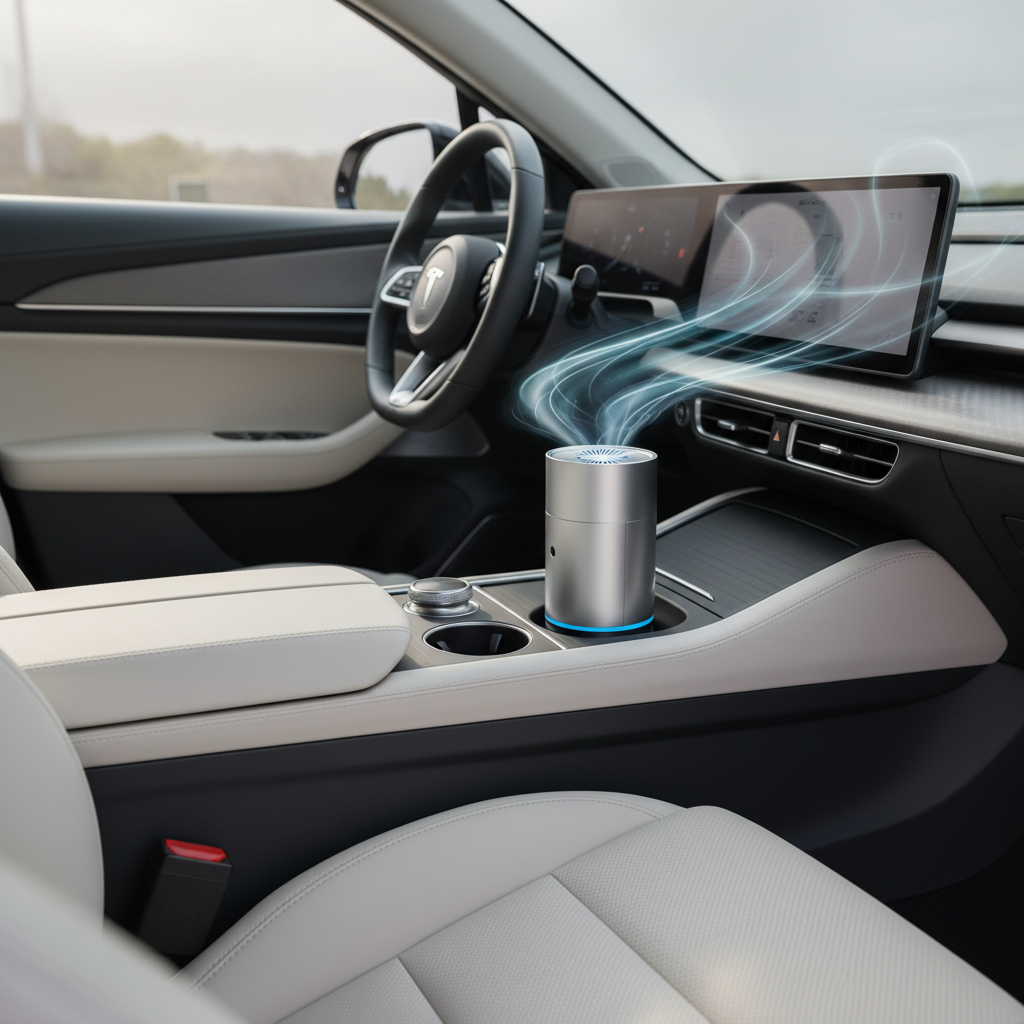
This guide breaks down what actually works for smoke removal in a small cabin, which features matter (and which are marketing), and how to use a purifier so you don’t waste money. You’ll also get a quick comparison table, a buying checklist, and a realistic “do this next” plan.
What makes smoke in a car so hard to get rid of
In most cars, smoke problems are a mix of airborne particles plus embedded odor. A purifier can help a lot with the air you’re breathing right now, but the smell source may still sit in upholstery and HVAC surfaces.
- Fine particles (PM2.5): smoke includes very small particles that stay suspended and can irritate eyes and airways.
- VOCs and odor molecules: some smell components are gases; a particle filter alone may not fully address them.
- Re-circulation through vents: if your cabin air filter or vents are contaminated, the smell can keep cycling back.
- Small volume, big swings: a car cabin changes fast with temperature and fan speed, so performance varies more than in a room.
According to EPA (United States Environmental Protection Agency), portable air cleaners can help reduce airborne particles indoors, but results depend on the device type, fit for the space, and how you use it. A car is a special case, yet the principle still holds: matching filter type and airflow to the space matters.
Quick picks: types of car air purifiers that work for smoke
When people are disappointed, it’s usually because they bought something that looks like a purifier but behaves like a scented gadget. For smoke, you want a real filter approach.
HEPA-style filtration (for particles)
True HEPA is the gold standard in homes, but in cars you’ll also see “HEPA-type” or “HEPA-like.” Many of those can still help with smoke particles, but quality varies. Look for clear filter replacement info and reputable testing language rather than vague claims.
Activated carbon (for odor and some gases)
Carbon is the difference between “air feels cleaner” and “smell actually fades.” The catch: carbon needs enough mass and contact time. A tiny wafer of carbon may not do much for persistent smoke.
Ionizers / ozone “purifiers” (approach with caution)
Some devices produce ions or ozone-like effects. Ozone is a lung irritant and can be unsafe at certain levels. Many manufacturers avoid calling it ozone, but the risk discussion remains. If a product mentions ozone generation, “oxidation,” or smells “like after a thunderstorm,” consider skipping it for daily driving, especially with kids or asthma in the car.
Best car air purifiers for smoke removal: comparison table (what to look for)
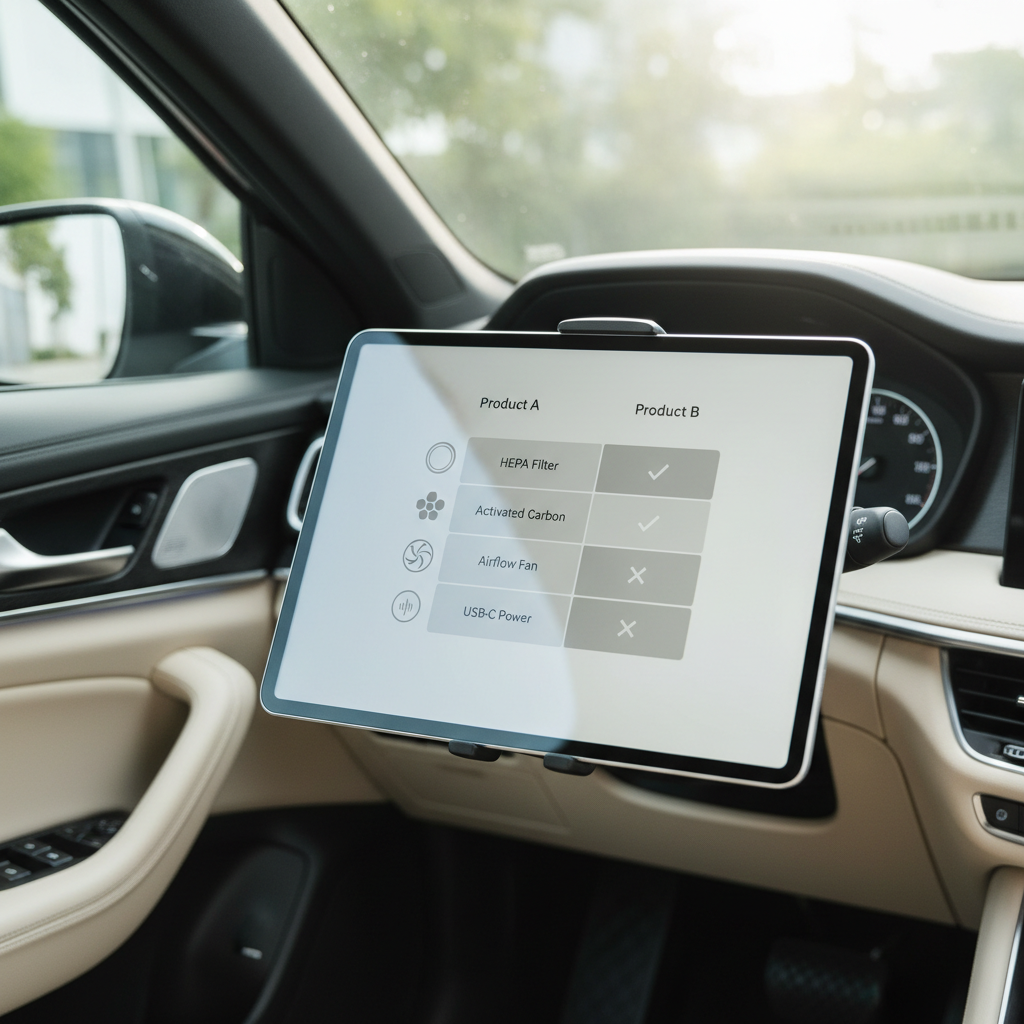
Because model lines change fast, it’s usually smarter to compare by spec and fit rather than chase one “perfect” unit. Use this table as a shopping filter.
| What matters | Why it helps with smoke | Good target for most cars | Common red flags |
|---|---|---|---|
| Filter type | HEPA handles particles; carbon handles odor | HEPA (or high-grade) + substantial carbon | “Purifier” with no filter details |
| Airflow / CADR-like rating | More air changes per hour means faster clearing | Enough airflow for a small cabin; multiple fan speeds | Only “whisper quiet” marketing, no airflow info |
| Power | Determines consistency on commutes | USB-C or 12V with stable draw | Battery-only that dies mid-trip |
| Noise | If it’s annoying, you won’t run it | Quiet on low, strong on high when needed | High speed sounds like a hair dryer |
| Replacement filters | Smoke loads filters quickly | Easy to buy, clear replacement cycle | Hard-to-find filters, unclear costs |
A practical buying checklist (so you don’t overpay)
Before you pick a device, decide what “win” means for you: less smell on short trips, better air during wildfire season, or removing stale smoke from a used car. Different goals push you toward different tradeoffs.
- You need carbon mass if odor is the main complaint, not just “HEPA-like” wording.
- Look for a sealed filter path, so air can’t bypass the filter around loose edges.
- Prioritize stable power (USB-C or 12V) if you drive daily; intermittent use slows progress.
- Choose a form factor you’ll actually place well: cup holder, seat-back mount, or console.
- Check filter availability before buying the unit, not after it starts smelling like an ashtray.
Key point: in many cases, the best car air purifiers for smoke removal are the ones you can run consistently at a meaningful fan speed without hating the noise.
How to use a car air purifier for smoke removal (step-by-step)
A purifier works best when you treat it like part of a small system: cabin filter, HVAC settings, and surface cleanup all influence the result. This is the part most people skip, then blame the device.
1) Start with the cabin air filter
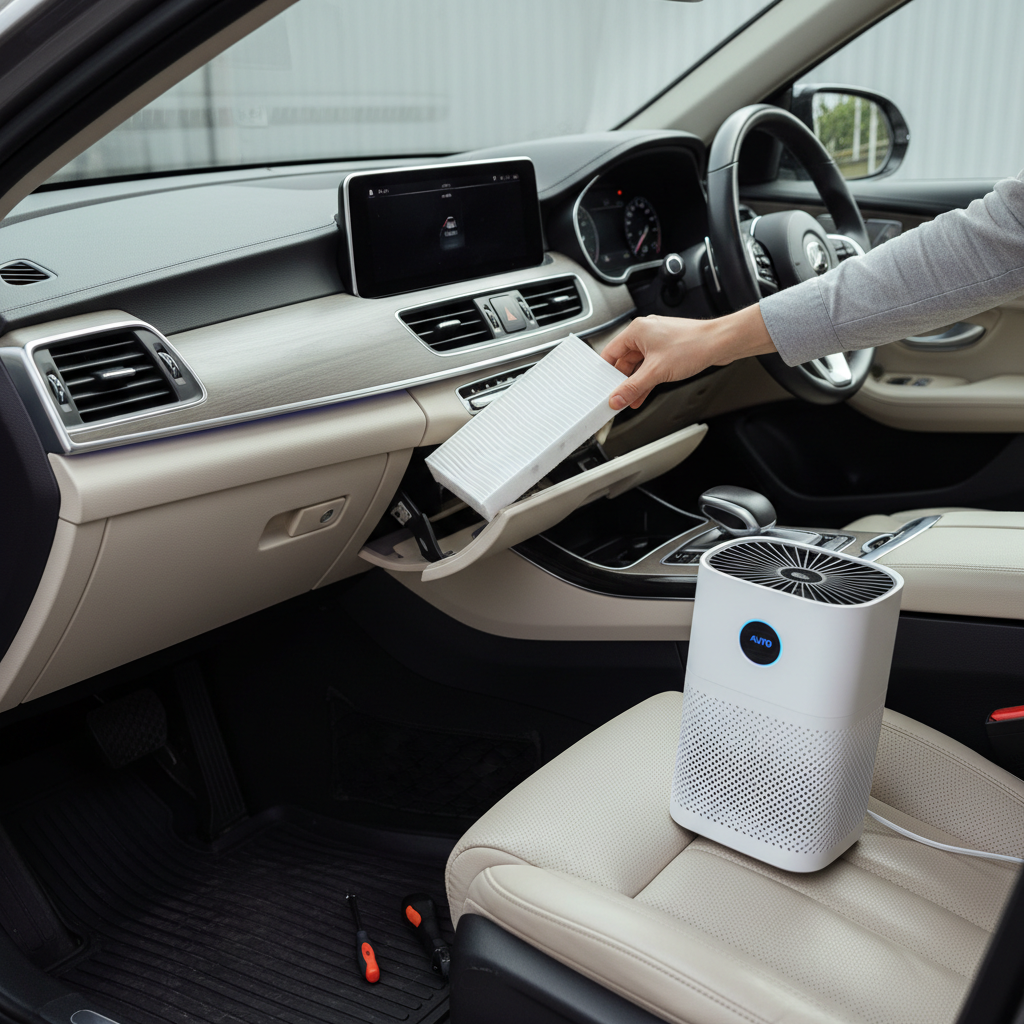
If you bought a used car or the smoke smell spikes when the AC turns on, replace the cabin air filter first. Consider a cabin filter with activated carbon if odor is a big issue. It’s not “extra,” it’s foundational.
2) Place the purifier where airflow can circulate
Cup holders are convenient, but don’t block the intake with a jacket, bag, or passenger knee. If it has an exhaust outlet, aim it toward the cabin center rather than into a seat cushion.
3) Use recirculation strategically
For smoke already inside the car, recirculation often helps the purifier cycle the same air repeatedly and clean faster. If outside air is smoky (wildfire season), recirculation can also reduce what enters the cabin.
4) Run high for short bursts, then maintain
On a smoky day, run high for 10–20 minutes, then drop to a quieter setting. If you only ever use low, results may feel subtle.
5) Pair with low-effort source control
Wipe hard surfaces, vacuum seats and carpets, and consider an upholstery-safe odor remover if needed. A purifier can’t pull smoke residue out of fabric instantly.
Common mistakes (and what to do instead)
- Mistake: Buying “ozone shock” gadgets for daily use.
Do instead: stick to mechanical filtration; if you consider ozone treatments, discuss safety with a professional detailer and follow manufacturer guidance carefully. - Mistake: Expecting one small device to fix years of smoking.
Do instead: combine purifier use with cabin filter replacement and deep cleaning; some cases need professional detailing. - Mistake: Running the purifier only when the smell bothers you.
Do instead: run it consistently for a couple weeks; smoke odor often fades gradually as surfaces off-gas less. - Mistake: Never changing filters.
Do instead: set a calendar reminder; smoke loads filters faster than “normal commuting dust.”
When a purifier isn’t enough (and you should get help)
There are situations where even the best car air purifiers for smoke removal will hit a ceiling, because the odor source is stronger than what a portable unit can overcome.
- Heavy third-hand smoke in headliner, foam seats, and carpets, common in long-term smoker vehicles.
- Mold or water damage disguised as “smoke smell,” especially if odor spikes with AC use.
- Electrical smell or burning plastic notes, which can signal a safety issue.
If you suspect mold, chemical exposure, or breathing irritation that feels unusual, it’s smart to consult a qualified mechanic or detailing professional, and if symptoms persist, consider speaking with a healthcare professional. A purifier can be part of the solution, not the diagnosis.
Conclusion: what to do next for a cleaner-smelling cabin
If smoke is your problem, focus on two things: real filtration (particle filter plus meaningful activated carbon) and source cleanup (cabin filter and surfaces). That combination is what typically turns “masked odor” into “actually improved air.”
- Action step 1: Replace your cabin air filter (preferably with carbon), then run your purifier on high for the first week of commutes.
- Action step 2: If odor remains after two to four weeks, plan a deeper interior clean or get a professional assessment.
FAQ
What’s the best filter for cigarette smoke in a car?
A combination of a high-efficiency particle filter (HEPA or comparable) plus activated carbon tends to work best. Particles and odor behave differently, so one filter type alone can feel incomplete.
Do car air purifiers really remove smoke smell or just cover it up?
Units with real carbon media can reduce odor over time, but if smoke residue sits in fabric and vents, you may still smell it until you clean or replace the contaminated components.
Should I use recirculation or fresh air mode with a purifier?
Recirculation often helps clear existing in-cabin smoke faster, and it can help during wildfire smoke events. Fresh air mode can be useful after the odor source is addressed and outside air is clean.
How long does it take to notice results?
For recent smoke exposure, you might notice improvement within a few drives. For a used car with long-term smoking, it often takes weeks plus cleaning steps, and results vary by material and severity.
Are ionizers safe in a small car cabin?
Safety depends on what the device emits and at what levels. If a product mentions ozone or “oxidation,” be cautious and read documentation closely; if you have asthma or kids in the car, many people prefer mechanical filtration.
How often should I replace filters when dealing with smoke?
Smoke can saturate filters faster than everyday dust. Follow the manufacturer schedule, but if airflow drops or the unit starts smelling smoky, replacement sooner is often reasonable.
Is a cabin air filter enough on its own for smoke removal?
A fresh cabin air filter helps, especially carbon versions, but it mainly affects air moving through the HVAC system. A portable purifier can add extra circulation and filtration right where you sit.
If you’re trying to clear lingering smoke odor and want a more straightforward path, start by choosing a compact purifier with a real particle filter plus substantial activated carbon, then pair it with a cabin filter swap and a basic interior clean, it’s usually the fastest way to see meaningful change without turning this into a full weekend project.