
Best car air compressor portable is a search most people make right after a low-tire warning, and usually when time and patience run thin. The good news, you don’t need the most expensive inflator to get reliable results, but you do need one that matches your tire size, power options, and how you actually drive.
A portable compressor can save you from hunting for a working gas-station pump, but the differences between models are bigger than most listings admit. Some are great for quick passenger-car top-offs, others handle truck tires better, and a few are “feature-rich” yet frustrating in real use.
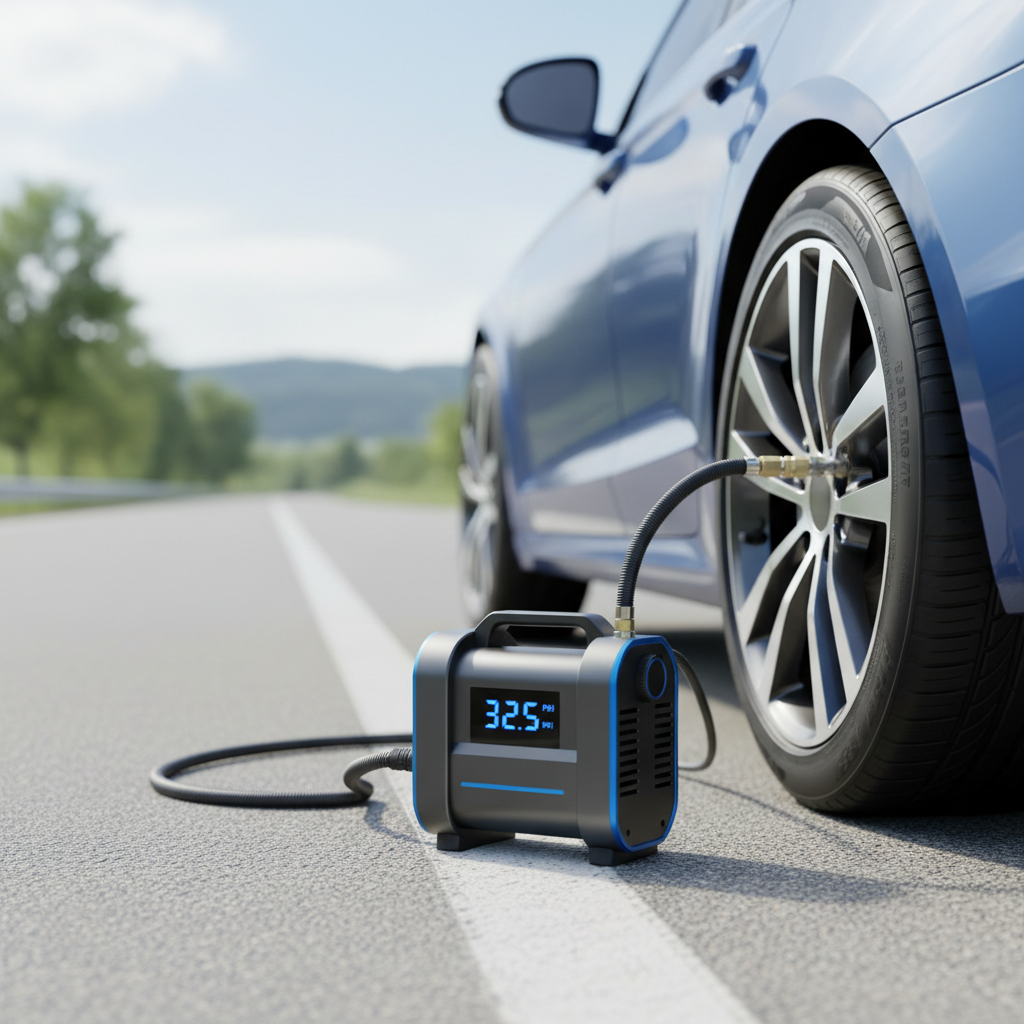
This guide focuses on what matters in the U.S. market: real-world performance, safety basics, and how to choose without overthinking it. You’ll also get a quick decision checklist, a comparison table, and practical tips that keep you from buying the “right” compressor that still annoys you every time you use it.
What “best” really means for a portable tire inflator
For most drivers, “best” means the compressor inflates fast enough, doesn’t overheat mid-job, and is easy to power in the places you’ll actually use it. Specs help, but they can mislead if you don’t connect them to your tire size and routine.
- For sedans/crossovers: quick top-offs, compact storage, accurate gauge, easy preset.
- For SUVs/light trucks: higher sustained airflow, longer duty cycle, stronger hose and chuck.
- For occasional emergencies: reliability and simple controls beat fancy modes.
- For frequent use: heat management, replaceable fuse, and build quality matter more.
Also, be honest about your tolerance for cables. Cordless is convenient, but a 12V plug-in can be more predictable when you’re dealing with larger tires or cold weather.
Key buying factors (and what to ignore)
Product pages love headline numbers, but portable compressors live and die by a few practical details. If you only remember one thing, remember this: match the tool to your tire volume and your power source.
1) PSI rating vs. real usefulness
Many models advertise high max PSI, yet that doesn’t guarantee faster inflation. Passenger vehicles rarely need extreme PSI; what you feel is airflow and stability. A unit that claims “150 PSI” can still be slow on a larger tire if airflow is weak.
2) Duty cycle (how long it can run)
Duty cycle is how long a compressor can run before it needs a cooldown. This is where small units often struggle: they might top off one tire fine, then heat up while you’re trying to fix the whole set. If you drive a larger vehicle, prioritize a longer duty cycle.
3) Power: 12V, battery, or both
- 12V (cigarette-lighter plug): dependable for most cars, but you’re limited by cord length and the vehicle’s socket capacity.
- Cordless battery: convenient and clean, but runtime drops on bigger tires, and batteries age.
- Hybrid (battery + 12V): often the most flexible option for a “one inflator for everything” setup.
According to NHTSA, maintaining proper tire pressure supports vehicle handling and helps reduce crash risk tied to tire issues, so convenience matters because it increases the odds you’ll actually use the tool.
4) Hose, chuck, and leakage
This is an under-discussed deal-breaker. A flimsy hose or a finicky valve connection wastes air and time, and you’ll end up squeezing the chuck at awkward angles. Look for a secure lock-on style (or at least a well-reviewed screw-on) and a hose length that reaches all four tires without gymnastics.
5) Gauge accuracy and preset behavior
A good gauge is readable and consistent. Preset auto-stop is useful, but not always perfect, especially as the compressor heats. Plan to verify with a separate tire pressure gauge if you care about accuracy, and many drivers do once they’ve dealt with TPMS warnings.
Comparison table: quick way to narrow your choices
Instead of naming “the one best” for everyone, this table helps you pick the best fit. Many shoppers end up happier choosing a category that matches their use case.
| Driver profile | Best match | Why it works | Trade-offs |
|---|---|---|---|
| City commuter, sedan | Compact 12V inflator with preset | Fast top-offs, easy to store | Cord management, limited on big tires |
| Family SUV, road trips | Hybrid cordless + 12V | Flexible power, handles multiple tires | Higher price, battery upkeep |
| Light truck, larger tire volume | Higher-duty 12V unit (clamps to battery) | Better sustained performance | Less convenient, more setup |
| Apartment living, minimal storage | Small cordless inflator | No cable fuss, quick checks | Runtime limits, slower on low tires |
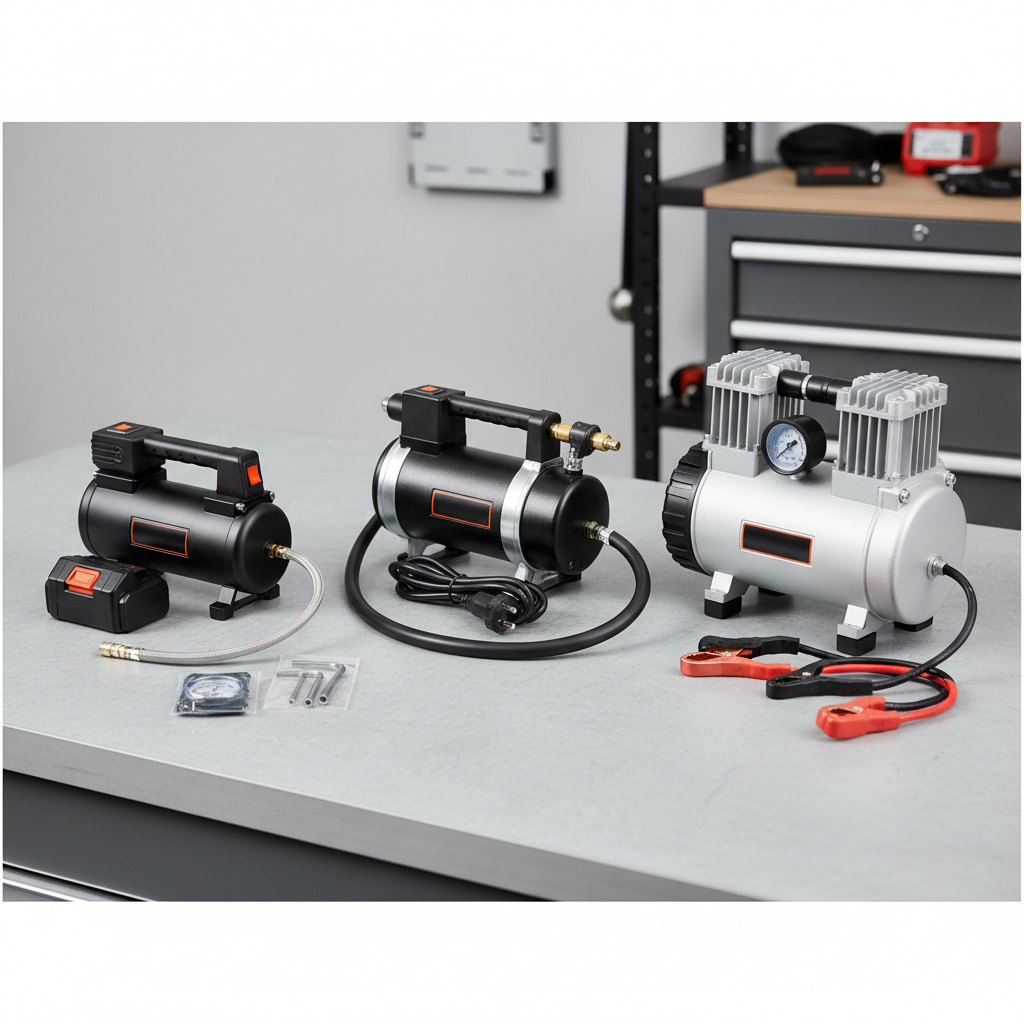
Self-check: which portable compressor type fits you?
If you’re not sure where you land, run through this quick checklist. It’s the fastest way to avoid buying a tool that looks great online but feels wrong in your trunk.
- Your vehicle tire size: small car tires tolerate smaller inflators; SUVs/trucks benefit from higher sustained output.
- How low your tires get: frequent slow leaks demand more runtime and less overheating.
- Where you’ll inflate: apartment garage, roadside, trailhead, work parking lot.
- Power access: reliable 12V socket, or you prefer battery convenience.
- Your patience level: if you hate fiddly connectors, prioritize a good chuck and hose.
- Noise tolerance: many compressors are loud; small “fast” ones can be shrill.
If you checked “SUV/truck,” “often very low,” and “I’ll use it on trips,” that’s usually a hint to avoid the smallest cordless inflators, even if reviews look decent for basic top-offs.
How to use a portable car air compressor safely (step-by-step)
Using a portable inflator is straightforward, but small mistakes create most of the frustration: inaccurate readings, overheating, blown fuses, or the compressor “not working” when it’s really a bad seal.
Step 1: Know your target pressure
Use the door-jamb sticker (not the tire sidewall). The sidewall shows max rating, not the recommended number for your car. According to NHTSA, correct inflation supports safe operation, and that starts with using the manufacturer’s spec.
Step 2: Inflate when tires are cool if possible
Warm tires read higher. If you just drove on the highway, readings can shift. If you must inflate immediately, aim for the recommended PSI and recheck later when practical.
Step 3: Connect the chuck firmly
Listen for hissing. If you hear air escaping, reseat the chuck, and keep the hose straight rather than kinked. A secure connection often matters more than raw compressor power.
Step 4: Use preset thoughtfully
Preset auto-stop is helpful, but don’t treat it as laboratory-accurate. Stop slightly under, check with a gauge, then top off. This reduces overshoot, especially on smaller tires.
Step 5: Respect cooldown time
If the unit feels very hot or slows down, pause. Many portable models have thermal protection, and you’ll lose time fighting it. This is also how you extend the compressor’s lifespan.
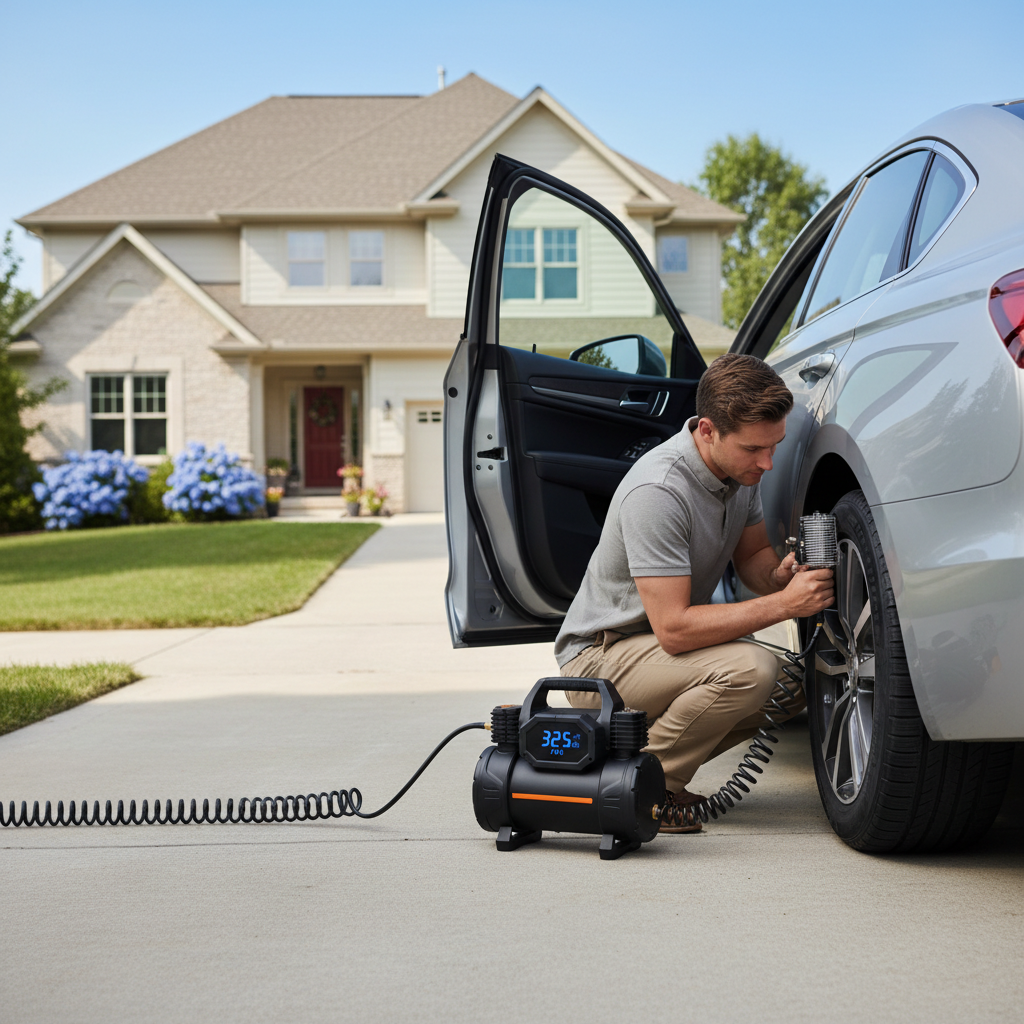
Common mistakes that make “good” inflators feel bad
A lot of one-star reviews come from mismatched expectations. Here are the traps that show up repeatedly, even with otherwise solid products.
- Buying by max PSI alone: airflow and duty cycle affect real speed more.
- Ignoring the power path: some 12V units blow fuses if your socket can’t support the draw, and some battery units underperform on large tires.
- Trusting the built-in gauge blindly: built-in readings can drift; a separate gauge is cheap insurance.
- Not planning for storage: if it’s annoying to pack, you’ll stop carrying it, and that defeats the point.
- Forgetting accessories: spare fuses, a valve-stem tool, and a simple flashlight often matter more than extra nozzles.
One more thing people miss: if you’re dealing with repeated pressure loss, the inflator is not the fix. It’s the bandage. You still need the puncture, bead leak, or valve issue addressed.
Practical picks: what to look for in “best car air compressor portable” listings
When you’re scrolling shopping pages, treat the listing as a starting point, not the truth. These filters usually surface the better candidates quickly.
- Clear duty cycle guidance or realistic use-case notes (not just marketing lines).
- Power details: amperage for 12V units, battery capacity and charging method for cordless.
- Connector quality: lock-on, sturdy screw-on, or metal parts where it counts.
- Readable display: large numbers, backlight, straightforward controls.
- Included spares: extra fuse, decent carry bag, and a long enough hose.
If you’re trying to buy one inflator for a household with mixed vehicles, hybrid power and better heat handling usually beat ultra-compact designs, even if the compact models look more “portable.”
When to stop inflating and get help
Some tire problems are not DIY-friendly on the roadside. If you see sidewall damage, a bulge, a nail near the shoulder, or the tire keeps dropping quickly after inflation, it’s safer to drive minimally or call for help depending on conditions.
- Rapid pressure loss: likely a puncture or valve issue, a shop can patch or replace based on location.
- TPMS warning keeps returning: could be a leak, sensor issue, or temperature swing, a tire professional can confirm.
- Visible cracking or bulging: avoid high speeds, consider towing if you’re unsure.
For anything that feels uncertain, it’s reasonable to consult a tire professional. Safety calls are rarely worth “pushing through” just to save time.
Conclusion: a smart way to choose and use one
If you want the best car air compressor portable for your life, aim for a tool that matches your tire size and your power reality, not the flashiest spec sheet. A solid chuck, sensible duty cycle, and a power option you can count on will matter every single time.
Action steps that usually pay off: pick a compressor category using the checklist above, and add a separate pressure gauge to your kit so you can verify readings quickly. You’ll spend less time guessing and more time driving.
FAQ
- What’s the difference between a portable air compressor and a tire inflator?
In shopping terms, they often overlap. “Tire inflator” usually means compact and purpose-built for tires, while “air compressor” can imply higher output or broader use. For most drivers, portability and duty cycle matter more than the label. - Is a cordless inflator strong enough for an SUV tire?
Many are fine for top-offs, but if the tire is significantly low, some cordless models slow down or run out of battery. If you drive an SUV often, a hybrid unit or a stronger 12V model tends to feel less stressful. - Why does my compressor shut off or slow down mid-inflation?
Heat is a common reason, especially with small units. Thermal protection may kick in, or performance drops as components warm. Let it cool and avoid running beyond the recommended cycle. - How accurate are built-in digital PSI gauges?
They’re convenient, but accuracy can vary by model and temperature. If you care about consistency, use a separate gauge to confirm, especially when adjusting pressures for trips or seasonal changes. - Should I inflate to the PSI on the tire sidewall?
No, in most cases you want the vehicle manufacturer’s spec on the door jamb. The sidewall number is typically a maximum rating, not the recommended operating pressure. - Can I leave a 12V compressor plugged in while driving?
It’s better to avoid running it while driving unless the manufacturer explicitly supports it and you can do it safely. In many situations, it’s safer to park, set the brake, and inflate with the vehicle stationary. - What accessories are actually useful to keep with a portable inflator?
A good tire pressure gauge, spare fuse (for 12V units), a small flashlight, and gloves cover most real-world needs. Extra nozzles are nice, but they’re rarely the reason a roadside situation goes smoothly.
If you’re shopping and you want a short list tailored to your vehicle type and how you drive, it can help to share your tire size, typical PSI target, and whether you prefer cordless or 12V, then narrow options to a few models that truly fit instead of guessing from specs.